If you’ve followed this blog for a while, you’ll note that there are some game developers towards which I have, shall we say, very intense feelings. You’ll often see me going on epic rants about their blunders or casually putting them down. Yet paradoxically I’ll play virtually anything these companies produce, and I remain rabidly passionate about their games. It could be pretty confusing to a reader.
 For all their flaws, though, each of these developers brings something special to the world of gaming, something exquisite that keeps me coming back for more. I thought it would be interesting to look at these companies and explain why I am so loyal to them, despite everything.
Up until relatively recently, only one developer would have fit his category, but these days the number has grown. No prizes for guessing that the original is…
Blizzard Entertainment:
I have been playing Blizzard games since before I knew how to spell my own name, and they remain a company to whom I am so loyal that I often joke they “own my soul.”
But that doesn’t mean I think they’re perfect. Far from it. In fact, they faceplant with alarming regularity, and their games are almost never without some significant flaw.
I think Blizzard’s brilliance and their blunders both stem from the same source: passion.
 Have you ever seen Chris Metzen talk about the games he’s worked on? He’s the living embodiment of childlike joy and enthusiasm. He has so much passion for Blizzard’s games it’s like he could spontaneously combust at any moment.
And I think that’s true of all of Blizzard to some extent. They love games. They love making games. They have fantastic passion for everything they do.
And therein lies their folly. I think much of Blizzard’s mistakes come from them being so caught up in their passion and excitement that they don’t take the time to pause and think if what they’re doing is really a good idea.
I think that’s how we got the trainwreck that is Warlords of Draenor. They thought, “Hey, I bet it’d be cool to bring back all the old Horde characters,” and never considered much beyond that. If they had, they would have realized what a powerfully dumb idea that is.
I don’t know if this preference for passion over common sense can explain every one of Blizzard’s mistakes, but I think it’s one of their most core flaws and the reason why their plots are often a bit shallow, their continuity nonexistent, and their games rough around the edges.
 But that same passion is what makes their games irresistible. Blizzard are so colourful, so larger than life, so bombastic and beautiful and unabashedly fun that nothing else can compete. I often say that Blizzard games may be popcorn movies, but they are the absolute best popcorn movies around.
Their passion means that when Blizzard gets something right, they get it so right. Legacy of the Void was a breathtakingly epic experience and an absolute joy from beginning to end. Ditto for Reign of Chaos, Reaper of Souls, and to a lesser extent Wrath of the Lich King and Mists if Pandaria.
At their best, Blizzard games are the perfect embodiment of the entire concept of “superior realities” that this blog is based on, an utterly engrossing vacation from anything resembling the real world.
Bioware:
I’ve often said that Bioware makes great choose your own adventure novels, but no one told them they’re a video game company. This is my way of saying that they’re good at story-telling, but that they seem to put no real effort into compelling gameplay.
Of all the Bioware games I’ve played, Inquisition is the only one where I’d list the combat and general game mechanics as a mark in the game’s favour. And even then, Inquisition’s combat isn’t great. It’s just decent. And I’m not sure I’d feel so good about if knight-enchanters hadn’t been so crazy overpowered.
 That leaves story-telling as Bioware’s strength, but even that isn’t entirely true. The main storylines in Bioware games are, at best, hit and miss. The only ones that really impressed me on that front are Dragon Age 2 and Mass Effect 3 (yeah, I’m a freak). Origins’ story was just weak, Inquisition and ME2 had potential but became entirely too bogged down with irrelevant side missions, and ME1’s story was okay but not exactly mind-blowing.
Bioware is also, ironically, one of the worst developers out there for marrying story and gameplay. As in they don’t even try. The story is told through scripted cutscenes that are entirely divorced from the actual gameplay. Game mechanics are almost never used to heighten or enhance the story being told. Part of the reason I was so impressed with Inquisition’s Trespasser DLC was because they finally did start using game mechanics to enhance the story (IE the mark going crazy).
However, there are two things about Bioware games that are truly special.
One is the choices they offer. Even if Bioware’s stories aren’t always stellar, they’re engaging because it’s your story. There’s a tremendous satisfaction to being able to react as you choose to the situations the game throws at you, and it allows you to become so much more deeply invested than you otherwise might be.
I was reflecting recently that I almost never make the “evil” choices in games, but I’m glad they exist, because it makes the “good” choices feel far more meaningful. Sometimes being the hero isn’t about saving the world so much as it is about simply not clicking the button that says, “[Torture him]”.
 It appeals to me as a writer, too. All the hard work of building a world and characters is done for me, and I can go nuts telling the story I want to.
Even then the choice system is often very imperfect. If I had a nickel for every time in a Bioware game I made the wrong choice because of a misunderstanding…
But very few games offer this kind of experience on this scale, so Bioware kind of has a monopoly.
The other thing Bioware does better than anyone else is creating amazing characters.
I’ve often tried to explain to non-gamers in my life what the characters in Bioware games are like, but words can’t do it justice. They feel real enough to reach out and touch. Going back and replaying a game feels like a family reunion. I genuinely miss talking to characters like Sera, or Tali, or Thane, or Merrill.
That’s not to say I always like the characters in Bioware games. In fact, every game has had at least one cast member I’d happily shove down a flight of stairs: Alistair, Isabela, Vivienne, Zaeed, Jack, Kaliyo…
 But even there, the depth of hatred I have for these characters speaks to their quality and realness.
Dontnod:
It might be a bit early to add Dontnod to the list, since they’ve only put out two games so far, but already they have all the makings of another company I love and hate in equal measure.
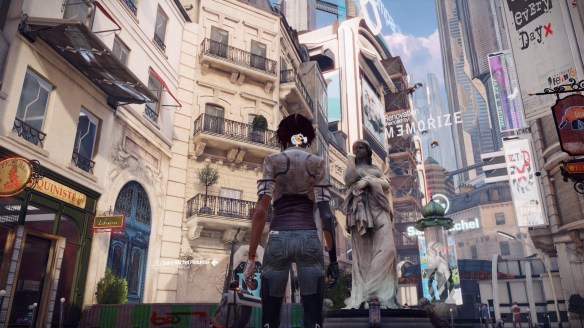
Life Is Strange and Remember Me were both brilliant games with serious flaws. On the whole, I found Remember Me was good enough to forgive the flaws, but Life Is Strange not so much. I know the general consensus is the other way around.
But what I respect is that both were games with big ideas, big ambitions. They tried to not only be good video games, but works of art, as well, and largely succeeded, despite their stumbles. I’d rather games that shoot for the stars and fall a little short.
 I’m already kind of excited about Vampyr, and I don’t even like vampire fiction.