The Secret World: Scenario Survival Guide + New Article

The new scenarios have proven a bit controversial among fans of The Secret World. Some love them, but many are struggling with their high difficulty. Surprisingly, I’ve been doing okay, at least on solo normal and group elite, so I thought I’d do a post advising people on how to cope with the Council of Venice’s trials.
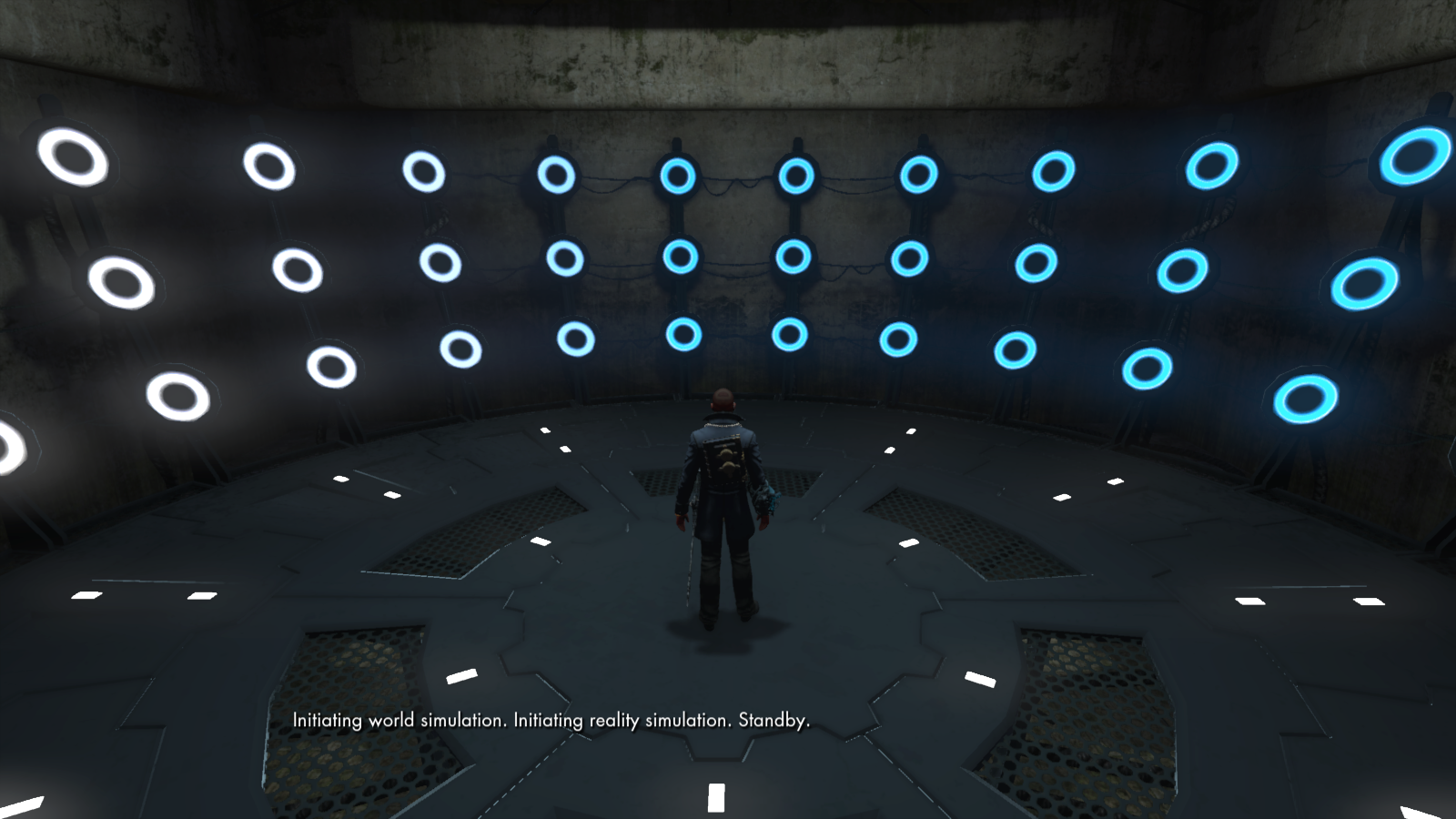
Beginning a scenario in The Secret WorldAs with my other guides, this isn’t intended to be comprehensive. It’s a basic primer for those who are just starting, or for those who have done a few scenarios but are still struggling.

It’s not a dungeon:

One of the most important things to understand before you start scenarios is that they are not just dungeons with randomized elements. They are a completely different type of content that requires entirely different ways of thinking.

For example, you don’t necessarily want to adhere to a hard trinity in groups. Having a dedicated tank and healer is helpful, but you could also consider having each player take a more balanced build, at least on the lower difficulty settings. I definitely don’t recommend ever using a full 1970 health glass cannon DPS build in scenarios, under any circumstance.

It’s also important to understand that victory is not all or nothing. It’s not like a dungeon where bosses are dead or they aren’t. I’ve seen a lot of people get frustrated because they can’t save every single survivor and thus feel like they’re failing, but this is not at all the case. As long as one survivor makes it out in one piece, you win. There’s nothing wrong with getting a few bronze or silver scores, especially when you’re just learning.

All your score affects is the number of Aurei you earn at the scenario’s closure, and Aurei are fairly easy to get, so don’t stress over them. Even with just a few survivors alive, you’ll still be getting lots of loot, copious amounts of XP, and augments.

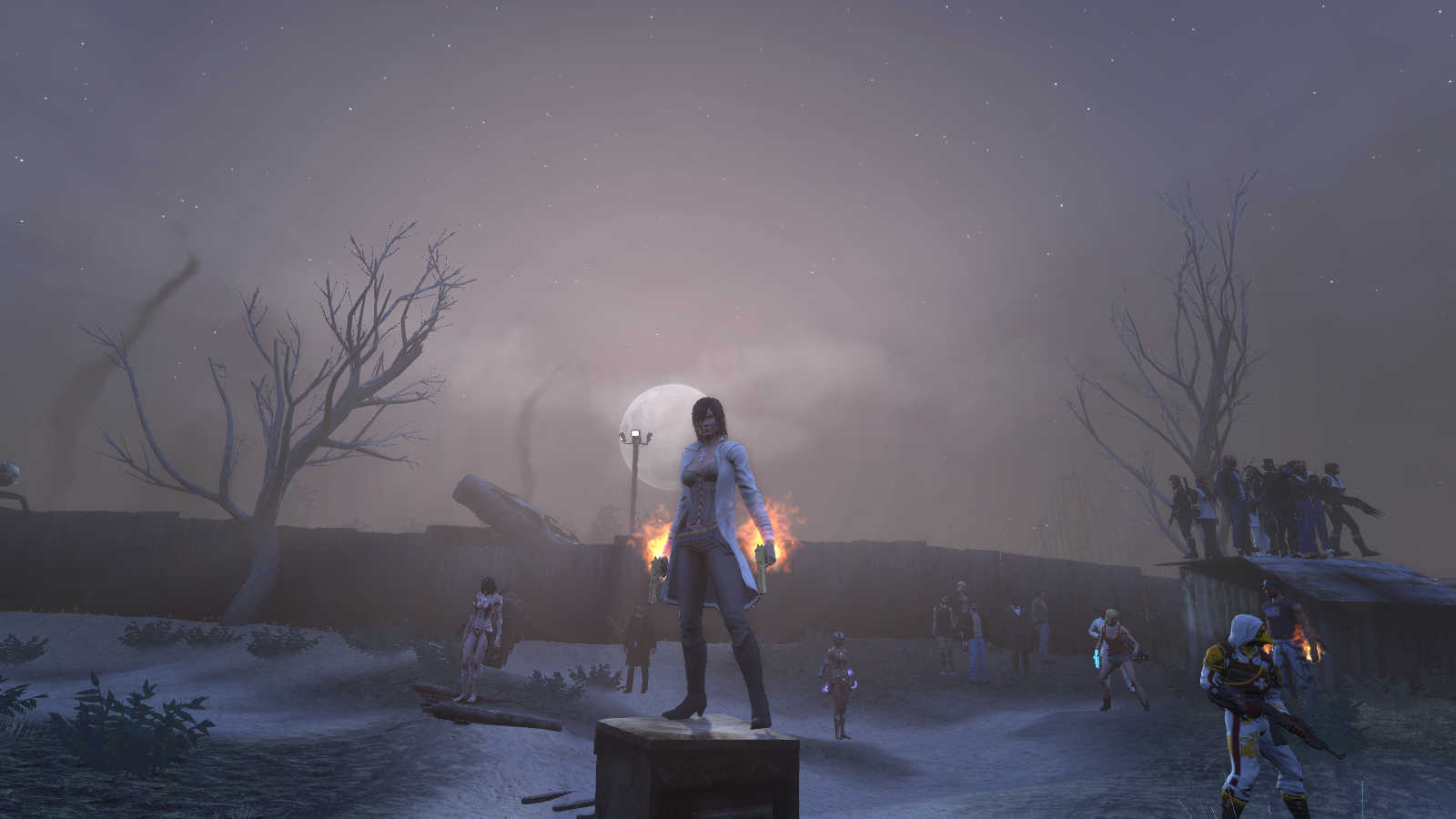
Caught in a dust storm during the Hotel scenario in The Secret WorldUse a solo build:

Unless you’re playing as a pure tank or healer in a group situation, I think that a soloing build tends to be ideal for scenarios. This is true whether you’re playing them alone, or serving as a DPS in a group.

I’ve already done some guides on solo builds, but the general idea is that you want to find a balance between DPS and survivability. The reasoning as far as group scenarios go is that your group will often need to split up, and you can’t rely on a tank or healer to always be there to keep you alive.

Having some AoE is also fairly helpful, as most enemies in scenarios travel in packs. Sword, chaos, and assault rifle (with Suppressive Fire as a builder) all seem like ideal weapons for scenarios.

Personally, I’ve found my Dragon’s standard soloing build with blade/blood absolutely rocks scenarios.

I’ve also heard tell that PvP builds work very well in scenarios, but I haven’t put the theory to the test myself.
My Illuminati running through the woods of Kingsmouth in The Secret WorldCC is your friend:

MMOs have trained us to think that crowd control is not for endgame PvE, and TSW has been no exception to that rule prior to now. Using impairs or hinders in a dungeon is generally a very bad idea, unless you’re a tank or there’s some special circumstance that requires it, and most open world nightmare mobs are immune to such effects, so we’ve also learned not to include a lot of CC in our solo builds.

But scenarios are where these abilities stage their epic comeback. Most enemies in scenarios are fully susceptible to both hinders and impairs, and that makes both of these excellent choices, especially AoE abilities such as Stunning Swirl from blades.

Hinders can help to keep enemies from reaching survivors. Impairs can do the same, or be used to interrupt enemies who are already attacking survivors, buying you a few moments to grab aggro. Impairs can also be useful versus bosses, especially the ghoul and bear bosses. When they gain their frenzy buffs that allow them to one-shot you, you can impair them to effectively shorten the buff’s duration, meaning less time fleeing and more time fighting.

I would also highly recommend including some hinders in your build any time you run the Castle scenario. One of the possible bosses is a fata padurii, and as anyone who’s done Last Dance of the Padurii knows, you can’t defeat them without first hindering their spirits and then kiting them away until their spirits despawn.

Personally, I like to switch over to blades/elemental for the Castle. Coldwave is pretty awesome.
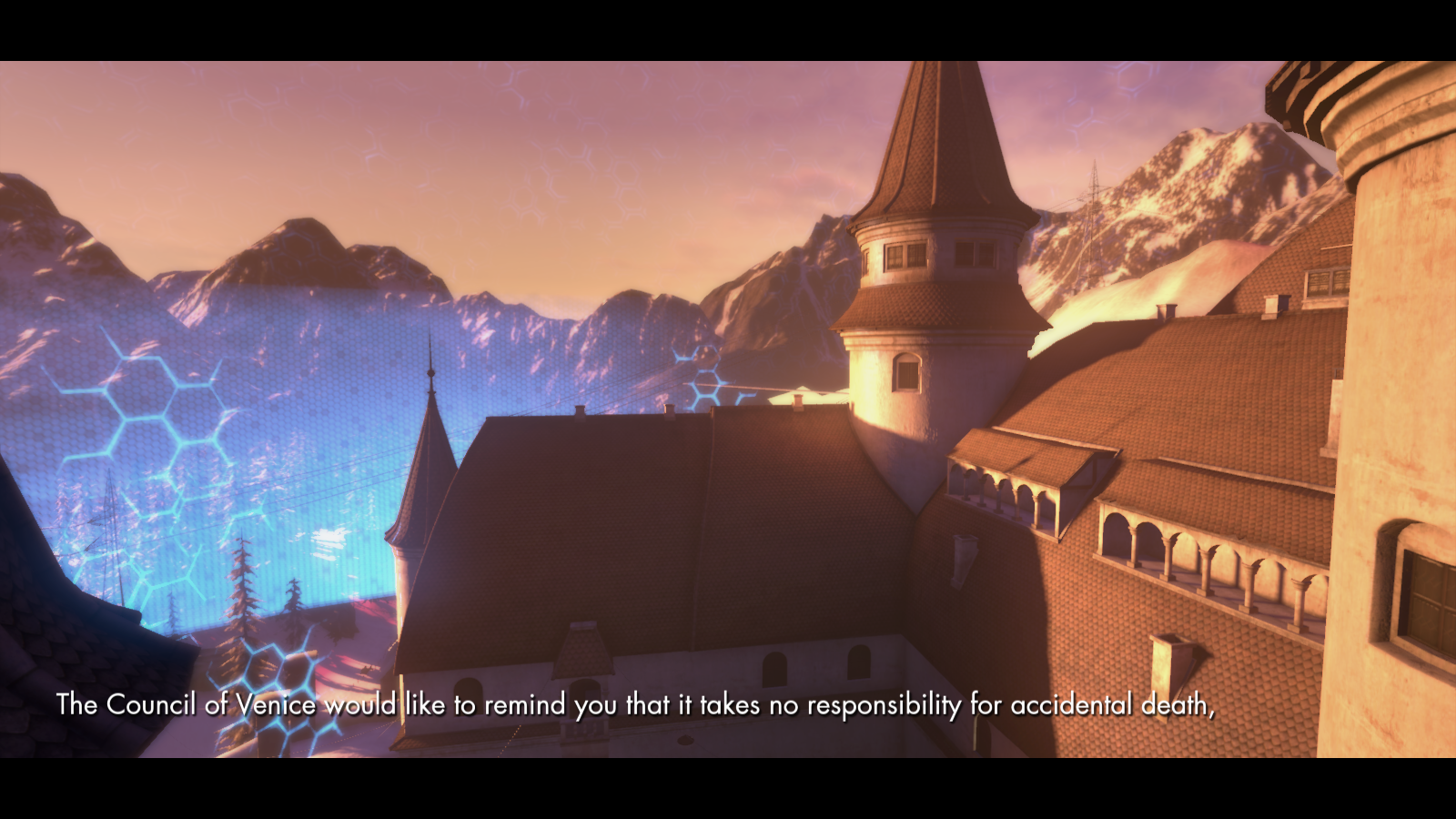
The intro cinematic for the Castle scenario in The Secret WorldThe best defense is a good offense:

This tip won’t be of much use until you’ve had some experience with scenarios, but I’ve found the best way to defend survivors is to not wait for enemies to come to you. Once you understand where each spawn point is, it’s best to run to it and meet the enemies long before they reach the survivors.

No matter how good you are at grabbing aggro, if you wait by the survivors, the enemies are going to get a few hits in here or there. Might not seem like much, but it adds up, and it can make the difference between getting gold and platinum.

Most maps have choke points where you can cut off waves of enemies and mow them down long before they threaten your survivors. Learn these chokes, and use them to your advantage. They’re also a good place to put mines if you get a supply drop.

On the subject of mines, I’d also recommend fighting enemies before they reach your mines. This may seem counter-intuitive, but the best use of mines is to use them as insurance in case a group comes under attack while you’re far away. If you’re already in the area, letting the enemies walk into your mines is a bit of a waste.

You probably don’t need augments:
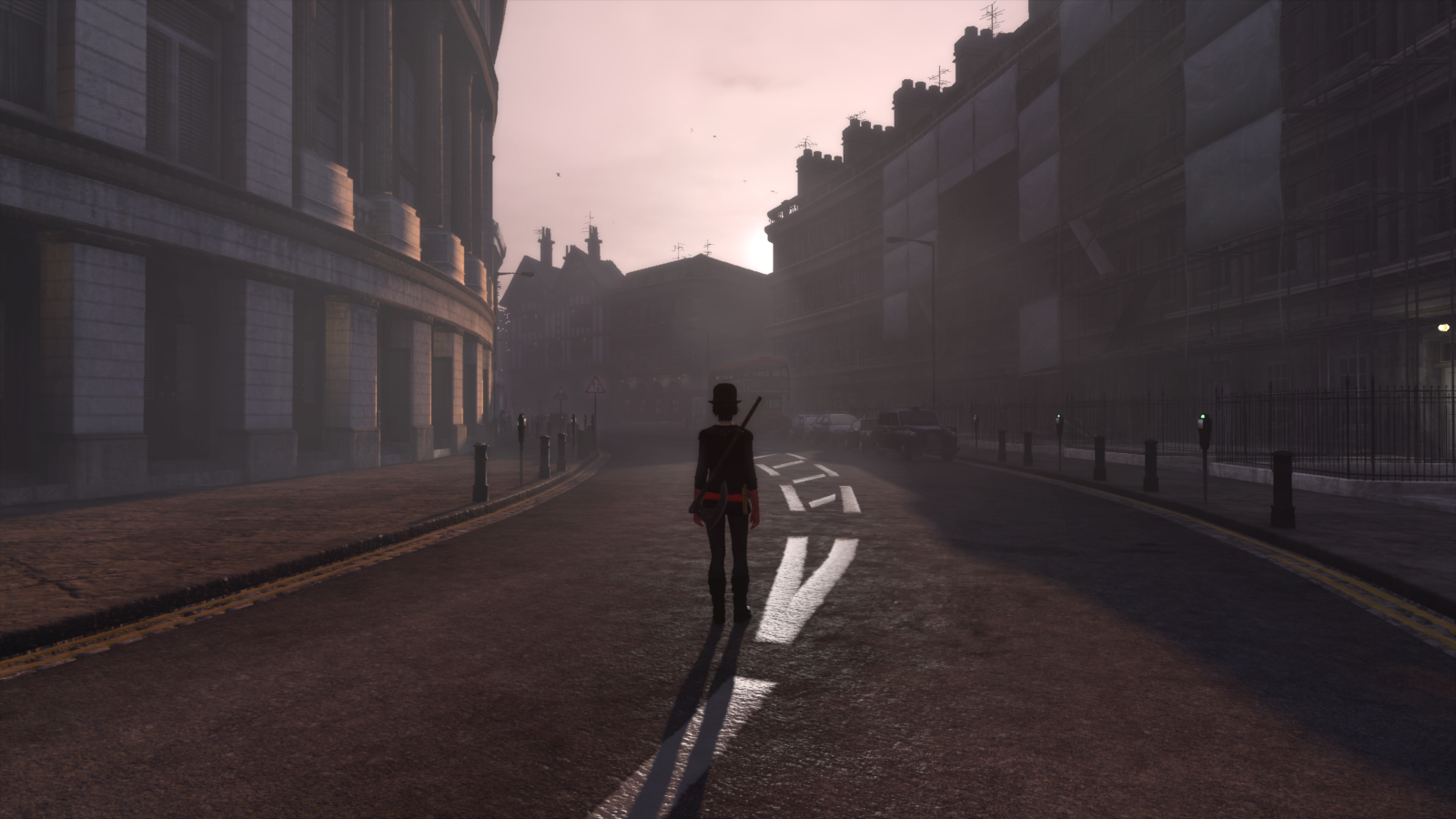
My Templar enjoys the evening air in The Secret World's LondonMy final piece of advice for scenarios is not to stress over what a massive grind augments are. Augments are first and foremost a sink for AP and SP for those who are already maxed out on most everything else.

Most augments don’t provide a very strong benefit until they’ve been upgraded multiple times, and the average player will have a better result from spending their time on other things, like filling out the main wheel or improving their gear.

There is currently no content in the game tuned around full, or even partial, augments, and Joel has recently confirmed Tokyo will not require augments. Augments are a bonus, not a mandatory checkbox that needs to be filled. So contrary to what some claim, there’s no need to grind hundreds upon hundreds of scenarios day after day, month after month. Relax and play through them at your own pace.

New article:

My latest article over at WhatMMO covers the Most Iconic MMO Abilities. It includes a screenshot of me QQing about subtlety spec, because why not?

TSW Solo Tips: Crafting Is Your Friend

It’s time for another guide to being an effective soloist in The Secret World. This time, I’ll be looking at crafting and how it can support the soloist.

The assembly window in The Secret WorldNow, crafting isn’t something that’s going to help too much in the early part of the game — with a few notable exceptions, which I’ll get to. You’ll replace gear quickly enough that it likely won’t be worth the effort, and it’s another complication that would worsen TSW’s already steep learning curve.

However, at endgame, crafting can be a fantastic tool for the soloist, and it’s one of the reasons being a soloist at endgame is so much more viable and rewarding in TSW than it is in most MMOs.

How it works:

Crafting in The Secret World isn’t like in other MMOs. They are no professions, no skill ups, no grind, and few limitations. You can create every craftable item in the game immediately after character creation, assuming you can somehow get the necessary materials. This means you can effectively ignore crafting early on and jump into it at endgame without needing any catchup.

Materials for crafting are mainly acquired by dissembling items you don’t need. To disassemble an item, open the assembly window — default hotkey is y — and place the item in the item slot at the bottom. Then click “disassemble.” Runes, which are one of the major crafting materials, also frequently drop from enemies.

Materials will tell you what they can be used for if you hover over them. For example, hovering over fire will tell you that it is used to add attack rating to items.

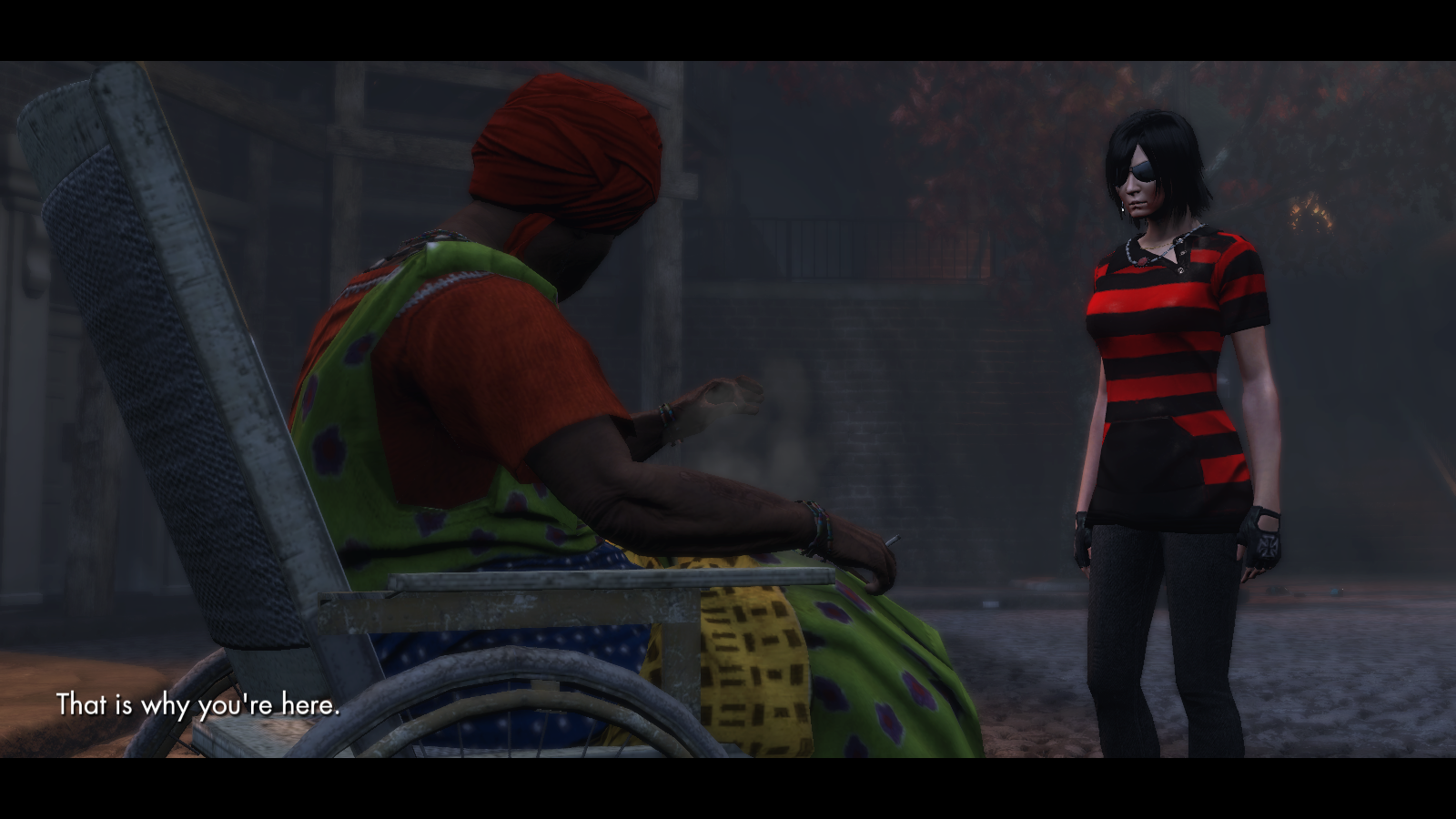
Mama Abena in The Secret WorldTo create an item in TSW, you need to place the materials in the assembly window in a specific pattern. What the correct pattern is depends on what you’re trying to make. Seven metal in one shape will make a sword, while those same seven pieces of metal in another shape could make an assault rifle, a blood magic focus, or any other weapon.

So it’s sort of a puzzle mini-game. To learn the pattern for an item, place it in the disassembly window, and it will show the item’s pattern and materials. You don’t have to actually disassemble the item. Just drag it back to your inventory once you’ve learned the pattern.

Of course, you could simply look up all the patterns online, but where’s the fun in that?

You also need a toolkit to craft most items. These are placed in the toolkit slot of the assembly window. The quality of the toolkit determines the quality of the produced item. A QL7 green weapon toolkit will produce a QL7 green weapon. A QL10 blue glyph toolkit will produce a QL10 blue glyph. Higher level toolkits require higher level materials.

Green toolkits drop often, but blue and purple toolkits would be best acquired from the auction house.

You can also combine many crafting materials to upgrade them to a higher quality level. Five sacred fire can be assembled to create one pure fire. Similarly, one pure fire can be disassembled into four sacred fire. No toolkit is required for this.

My Templar striking a pose during the Guardians of Gaia eventTen toolkits can be combined to create one toolkit of a higher quality — green to blue, for instance — with an “artisan’s tool augmenter” toolkit. You can even make purple toolkits this way, providing the only reliable way of getting epic gear outside dungeons and PvP, though it is a fairly intensive grind.

Customization:

The most basic use of crafting in TSW, and one that everyone should learn early on, is how it allows you customize your gear. Most gear in TSW has a modular design: the item itself determines base stats (health, attack power, etc.), its glyph determines its secondary stats (hit, block, etc.), and signets add special effects similar to enchantments in other games. Note that signets only apply to QL10 gear.

While it barely qualifies as crafting, you can customize your gear by adding a new glyph or signet. Simply place the item and the desired glyph/signet in the assembly window and hit assemble. No toolkit required. Note that any glyph or signet already in the item will be lost.

This is a great way to customize your gear towards your needs. Penetration rating and hit tend to be the best stats for soloing, but it can depend on your build. I’d focus on damage signets, but a few tanking or healing signets, depending on their effects, can be useful for the soloist. For example, my Dragon’s sword has a signet that grants a damage absorption barrier on critical strikes.

Gear and gadgets:

Although TSW is generally a great game for soloists, your options for gear progression are pretty limited. Discounting the handful of epics from the issue storylines, you’re limited to QL10 greens or QL9 blues — I strongly recommend ignoring the QL9 blues; you want signet slots.

Theodore Wicker at the end of Hell Eternal in The Secret WorldHowever, crafting offers another option. It’s fairly easy for a solo player to get a full set of QL10 blue gear through crafting, and if you’re willing to put in the effort, you can even get QL10 epics this way. It’ll just require a great deal of pax romana, a great deal of time, or most likely both.

Start by crafting weapons. While blue talismans are something of a tradeoff versus greens because green talismans include a balance of health and damage instead of just one or the other, blue weapons are simply better than green weapons with no disadvantage.

Crafting is also the main way to get gadgets in the early game, and the only source of gadgets for soloists. Gadgets are similar to trinkets in other games. You can activate a gadget for a powerful temporary buff on a two minute (ish) cooldown. Gadgets can provide either offensive or defensive effects, and you can have as many gadgets as you want, though they all share the same cooldown.

I recommend a gadget that boosts attack rating, but feel free to experiment with others.

Consumables:

Crafting can also be used to produce any of the consumables found in the game. Now, I don’t recommend crafting create energy drinks or any of the standard buff consumables. These drop so often from enemies that it’s just not worth wasting the materials.

But there is one type of consumable that can be a Godsend to soloists and can only be acquired through crafting: pure anima.

My Dragon blasting zmeu with his quantum BRACE in The Secret WorldPure animas provide powerful buffs to core stats — health, attack rating, etc. — and persist through death.

I cannot overstate how handy pure animas are. For example, if you’re struggling with survivability, drinking a health pure anima can be a literal lifesaver.

* * *

I hope this guide will help you to capitalize on the benefits of crafting in The Secret World. Not only is crafting in TSW surprisingly useful, but I’ve also found it surprisingly fun.

I’ve always liked the idea of crafting in MMOs. I enjoy the fantasy of going into the wild, harvesting materials from the local wildlife, and MacGyvering it into a new weapon or suit of armor. But in practice, it always turns into a tedious grind with little benefit.

But I actually enjoy crafting in TSW. There’s no grind, and discovering all the patterns and recipes makes for a great little mini-game.

If you’d like to learn more about crafting in TSW, you can check out this extensive guide on the official forums. However, I really do recommend learning on your own without the help of such detailed guides. It can be a very rewarding process.