An open secret:
 This past weekend, Funcom decided to celebrate the one month anniversary of the launch of their horror/urban fantasy MMO The Secret World by opening it to everyone for free, and of course, I was eager to jump on the free lunch.
I’ll say off the bat that my computer was scraping the bottom of the system requirements, so I had to cope with serious stability issues and keep the graphics turned down — as you’ll see from my screenshots.
Dark days have come:
Normally, I’d start one of these posts by talking about the core gameplay mechanics, but I feel like jumping into dry discussions of TSW’s nuts and bolts would do the game a disservice. The first things that you notice when you start playing, and perhaps the most memorable parts of the game, are its spooky ambiance and mysterious storyline.
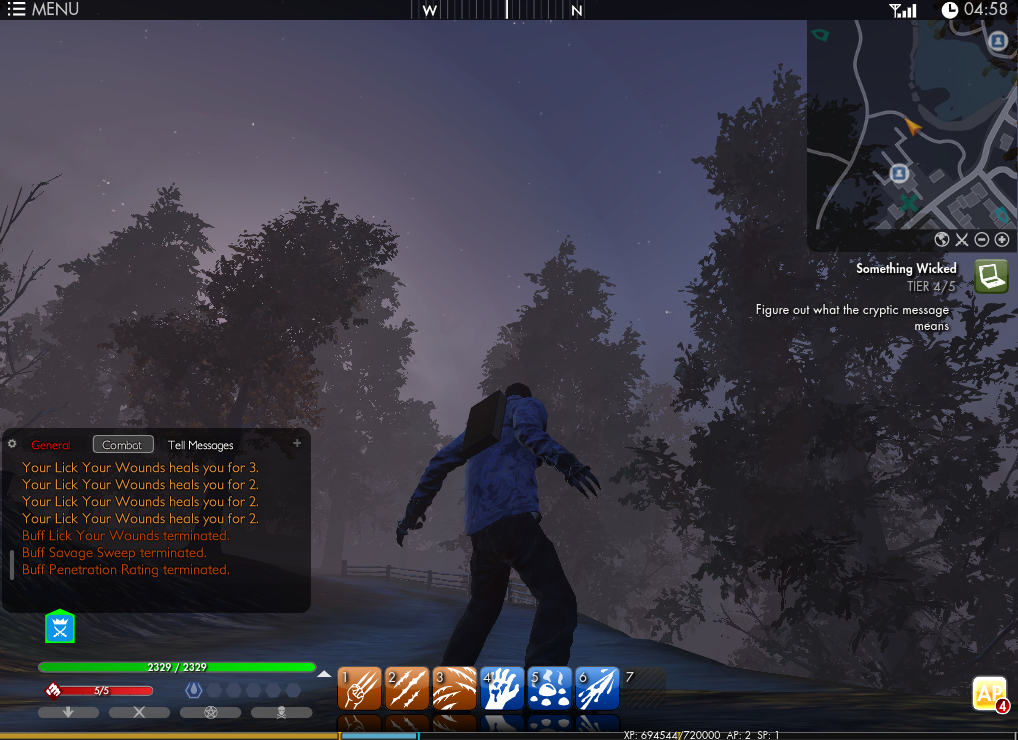 I think I’m probably one of the biggest high fantasy fans on Earth, so it’s impressive that even I’m sick of high fantasy MMOs. The Secret World is incredibly refreshing for its mix of horror and urban fantasy. Not a Dragon nor an Elf in sight.
The game bleeds ambiance — no pun intended. I credit the audio for much of this. The sound effects are all stellar — from the distantly heard seagulls in Kingsmouth to the blood-curdling howls of the zombies — and the music, while very subtle, is top notch and creates a great feeling of tension.
That I could still feel so immersed despite the technical issues is no small feat.
I didn’t get to experience too much of the game’s story in the short time I played, but what I saw, I liked. The story itself is not brilliantly deep or wildly original, but colourful characters, good ambiance, and great attention to detail make it very compelling.
 Do you remember how I said there had to be a happy medium between World of Warcraft’s dull quest text and Star Wars: The Old Republic’s “voice-over all of teh things” philosophy?
The Secret World is that happy medium. Each major quest has a nice voice-acted intro, and then that’s usually it — barring the occasional story event. No more voice-overs or text. Just action. Shorter quests just get some very brief text instructions. It’s more immersive than WoW and less time-consuming than SW:TOR.
You can get more dialogue from the important characters if you want it, but it’s all optional. Though I would recommend it, as most of the characters are quite memorable. I particularly liked hearing about chaos theory from the Dragon historian.
Revealing the secrets:
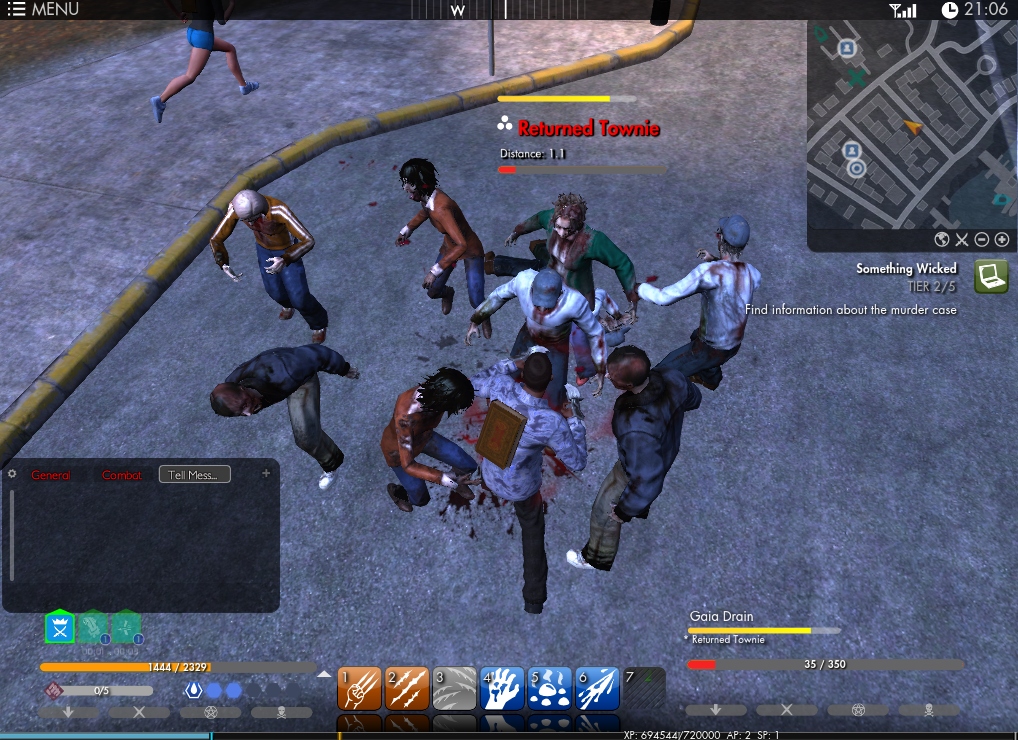 And now we come to the actual gameplay. This is an area where I honestly don’t know how to feel.
I’ll start by saying that the “levelless” progression system isn’t as revolutionary as it’s cracked up to be. You still grind XP to get points to increase skills and learn new abilities. There are subtle differences between leveling in TSW versus other MMOs, but they’re just that — subtle.
The lack of classes is a bit more interesting. Every character has access to every single ability in the game, and there’s almost no limit to what kind of character you can build. Theoretically, you could eventually acquire every ability — though you can only have seven active and seven passive abilities equipped at any time, which adds an element of strategy.
If this sounds potentially overwhelming, it is, but Funcom did a reasonably good job of lessening the otherwise steep learning curve. For those of us who aren’t theorycrafters, there are “decks” — recommended builds that you can choose to follow. I opted for a melee/caster hybrid deck, and I found it very fun.

Still, this definitely isn’t a game that can be readily jumped into by the less experienced gamers out there.
That brings me to the combat, which I found to be another strength of The Secret World. Like The Old Republic, TSW has no auto-attack, but unlike SW:TOR, abilities tend to be limited by resources rather than CDs, so combat feels much more fast and fluid. If you’ve played a rogue or a monk in WoW, things will feel somewhat familiar.
The mobs are also a lot more varied and challenging than in your average MMO. Some are weak and travel in packs, while others are powerful but solitary. Some overwhelm you with powerful melee attacks, while others will kite you while harassing with ranged abilities. The extra challenge can be occasionally frustrating, but mostly I was glad to find a game where leveling couldn’t be done by a blindfolded chimp with brain damage.
The quests (called “missions”) are what I feel most mixed on. The missions are divided into several types, of which four are the most prominent: story, action, investigation, and infiltration.
 Action missions are the most common, and also the closest to the standard MMO fare. A lot of kill this and collect that, though with enough variation and quality of life improvements to still feel reasonably fresh.
Infiltration missions are a bit different. These involve using stealth and cunning to evade traps and patrols. Very different from what you see in most other MMOs.
Investigation missions are more different still. These involve following clues to solve mysteries and puzzles, and they’re unlike anything I’ve ever seen in a game. They require a great deal of cleverness and thinking outside the box, and many require you seek information from outside the game.
To this end, TSW includes a built-in web browser so that you can use the Internet to find the information you need. Funcom has even built a few websites specifically for you to find and use as a source of clues. Of course, you could also simply Google the solutions to the missions directly.
 Finally, story missions tell the main plot of each zone and combine elements of all the other types.
The infiltration and investigation missions are what give me mixed feelings. I’ll admit: I’m terrible at these. Embarrassingly so. So I often found them quite frustrating, but at the same time, they are a wonderful break from the usual MMO monotony, and I have to give them major points for originality.
Ultimately, I think I would need to play more of the game to decide exactly how I feel about the quest design. Investigation missions, in particular, require you to completely change how you think about games, and that’ll take some getting used to.
Verdict:
I can’t see myself buying TSW in the current climate. It’s got that icky subscription, and the technical issues are just too big a hurdle. Even so, though, I think it’s a very impressive game. It’s probably not ideal for MMO newbies or people with less than stellar machines, but I would recommend it to the true gamers out there. It’s a very unique experience with a lot to recommend it.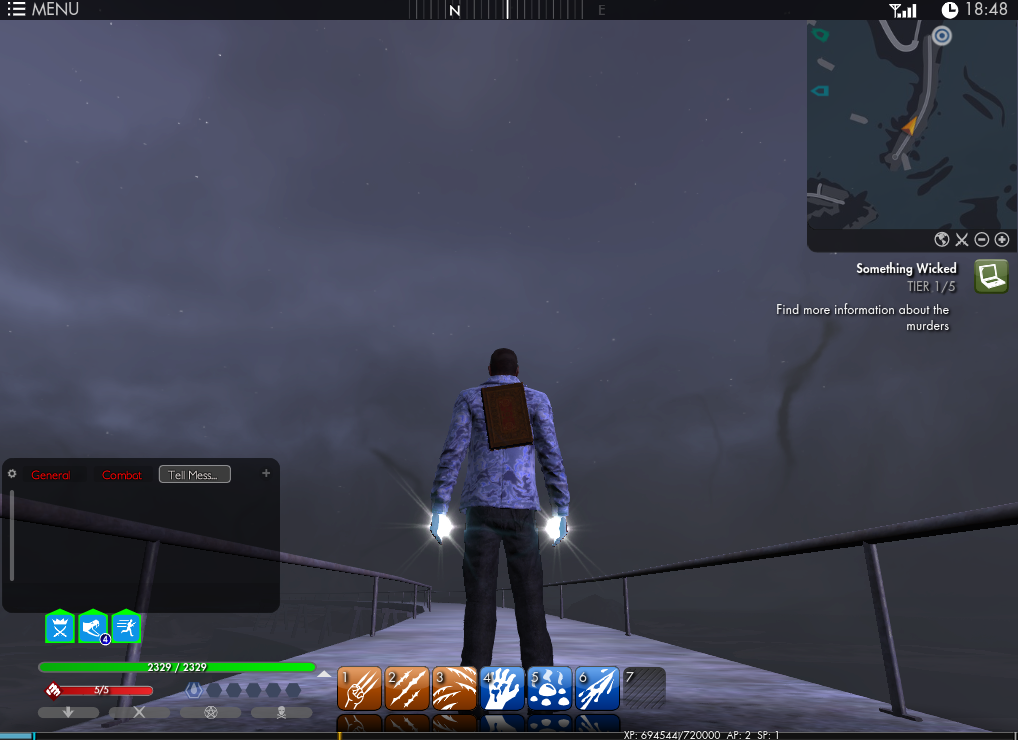
 For another, no one but the most ardent Star Wars fanboys would have claimed SW:TOR was a runaway hit. It had nice sales early on, but as always, it failed to come anywhere close to WoW. And there were a lot of indications that it was struggling — server merges and the like.