
I’m a tank lock and so can you:
 It’s the brutal home stretch before World of Warcraft’s next expansion, and we’re all scrambling for something to do to occupy our time until the Coming of the Pandas.
One of my solutions has been to experiment with the new warlock “kinda-sorta-almost-tank” stance, dark apotheosis, to solo old content.
I’ve had pretty mixed feelings on dark apotheosis (DA), which is granted by the glyph of demon hunting. I liked the original concept of warlock tanks, but Blizzard has made clear they don’t want warlocks tanking and will nerf the glyph if it ever becomes a possibility.
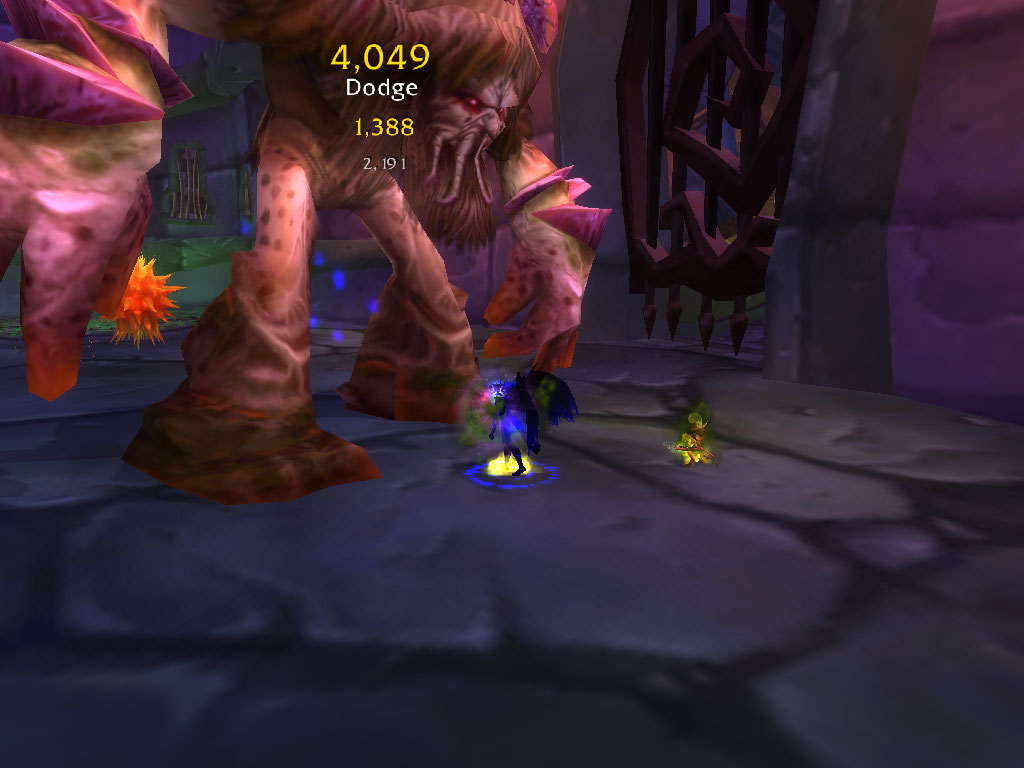 DA still has applications for soloing old content and PvP, but I’m not comfortable with a glyph that is not only useless but potentially very harmful in group PvE settings, so my opinion for a while has been that the glyph should be scrapped to prevent it becoming a trap.
Now, though… I don’t know how to feel.
I’d heard DA was amazing for soloing, but I didn’t know exactly how amazing. I was bored out of my mind, though, so I thought, “Hell, I’ll go solo Naxxramas.”
I fully expected to fail. It’s a level 80 raid, and warlocks are clothies. My rogue couldn’t even solo the trash for Tempest Keep, and that’s level 70. But I figured I’d start high and work my way down until I found something I could successfully solo.
 Yeah.
Yeah.
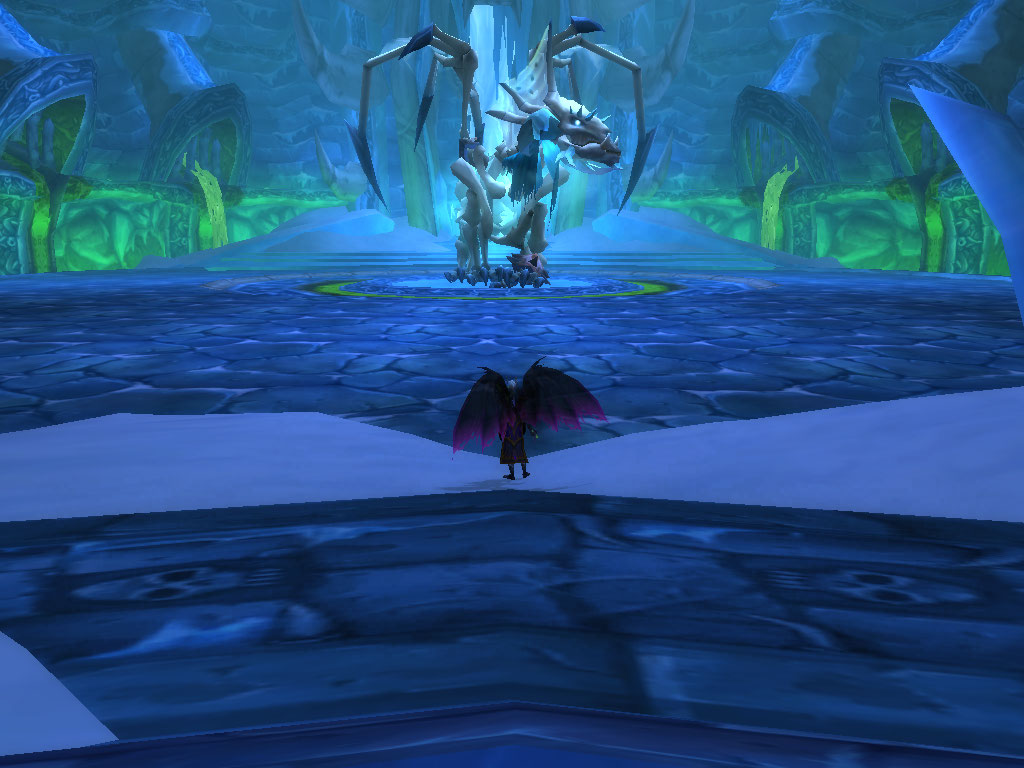
In the end, I was able to kill Sapphiron, Kel’thuzad, and the entire Plague Wing over the course of two days. I had trouble with the other bosses largely due to unkind mechanics. I then moved on to Tempest Keep, killing Al’ar before growing tired of begging guildies to group with me.*
*(Seriously, can we get rid of the raid group requirement for entering instances?)
It’s hard to overstate the amusement that comes of a twiggy, 50-pound Blood Elf girl in a robe getting into a fist fight with a dragon the size of a farmstead and winning. And I really enjoyed the challenge.
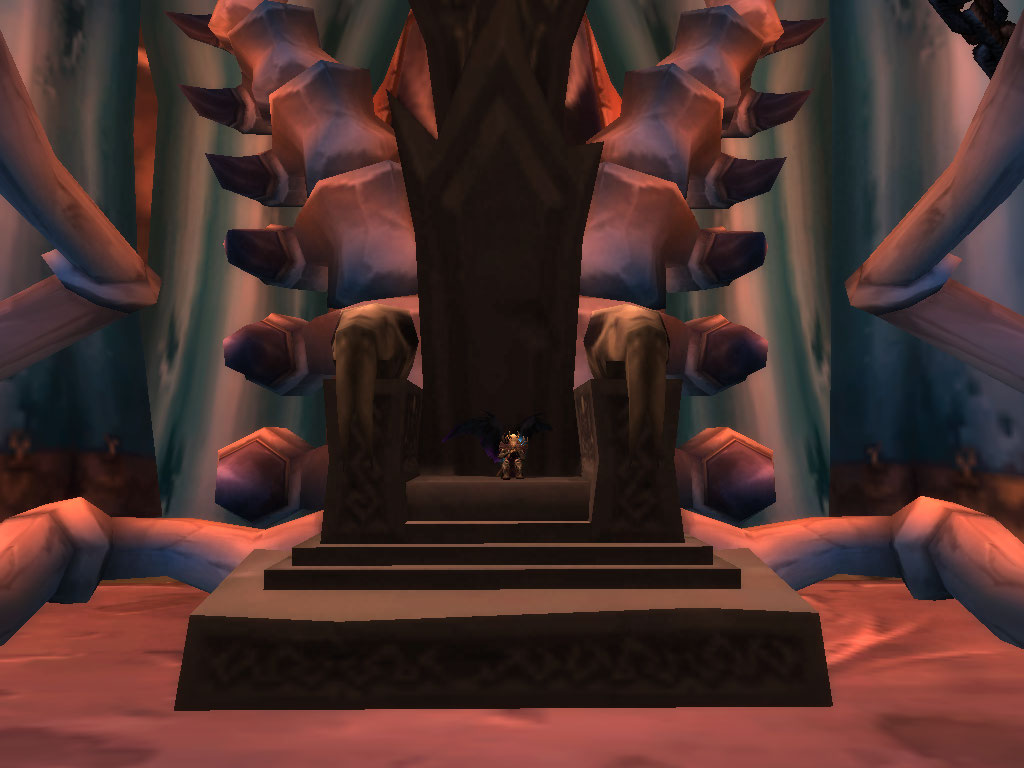
Kel’thuzad was especially thrilling, and especially frustrating. It took me at least half a dozen tries over two days to finally defeat him. It’s an easy fight until the final phase, but there’s so much damage from the adds that join him in phase three that it becomes a brutal race to kill him before they kill you. I had to improve my gear and tweak my strategy to finally get him down — turns out the DPS from a volcanic potion is more useful than a health potion.
 I’m not an expert player, so if you’re looking to do some DA soloing on your warlock, there are undoubtedly better resources on how to do so, but here’s some quick info on how I did it.
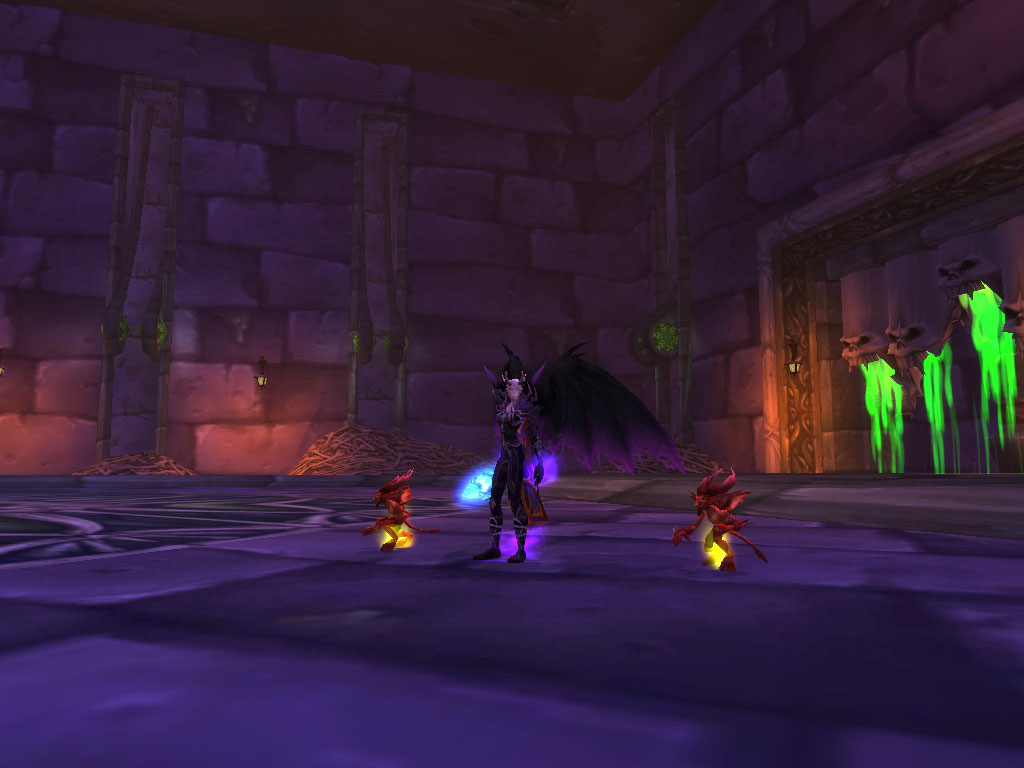
My talents: dark regeneration, mortal coil, soul link, burning rush, grimoire of sacrifice (sacrificed voidwalker for shadow bulwark).
My glyphs: demon hunting (duh), siphon life, healthstone.
This a build I made specifically for soloing. These are not my usual talents. Nice thing about the new system is that it’s easy to change builds on the fly.
 Basic rotation:
- Keep corruption up.
- Use demonic slash and hand of Gul’dan on cooldown.
- USE FURY WARD ON COOLDOWN.
- Only use soul fire when molten core has procced and you have excess fury. It’s a powerful source of damage and a crucial part of defeating many of these encounters, but using it too much will leave you without enough fury for fury ward. This is very, very bad.
The general tanking rule of cycling your cooldowns and not stacking them generally applies. However, pairing dark regeneration and shadow bulwark with your healing spells (not with each other) can be very beneficial, as both increase the effectiveness of mortal coil and healthstone for their duration. Popping dark regen and a healthstone returns nearly your full health bar.
Finally, make sure to abuse the hell out of consumables. For Kel’thuzad, I used the drums of ancient kings, a runescroll of fortitude II, bloodthistle (more for role-playing reasons than anything, really, but it does help a bit), the food buff from a fortune cookie, and a volcanic potion. I saved the potion for the final phase and paired it with my doomguard for maximum damage.
A new article, and a very underrated game:
My latest article for WhatMMO is Top 5 Underrated MMOs.
I’d actually like to elaborate a bit on the #1 entry on the list. Spoiler alert: it’s The Secret World.
 You may remember when I played TSW before, I said there were parts I had mixed feelings on, and that I’d need more time with the game to fully decide if I liked them or not.
Well, Funcom obliged. Shortly after I wrote that post, they added a more standard free trial, and amazingly, I was able to play it despite participating in the earlier trial. I was even able to continue from where I left off with the same character.
Having spent a full week playing The Secret World now, I can say my mixed feelings have faded. Despite their occasional frustrations, I definitely enjoy the infiltration and investigation missions. They’re so wildly unique and original that I just have to appreciate them.
More than that, the aspects of the game I already liked — such as the story, combat, and lack of classes — only grew on me further. Also, it has Jeffrey Combs in it. Jeffrey freaking Combs.
Long story short, I’ve been having withdrawals ever since my trial ran out.
Unfortunately, there are too many games out right now. With Mists of Pandaria on the horizon and my annual pass a few months away from expiration, it makes no sense for me to pay for another subscription game at the same time. And there’s also Guild Wars 2 to find time for at some point…
But damn it, I’m going to find a way to play TSW sooner or later. And in the meantime, I encourage everyone to go to their website and sign up for the free trial. The Secret World is a criminally underrated game that deserves far more recognition than it’s gotten.
Honestly, it makes me angry when I realize how much this game has been ignored in favour of other titles. It deserves so much better. It’s certainly far more original and compelling than Rift or The Old Republic, and in some ways, I’d say it could even give Guild Wars 2 a run for its money.
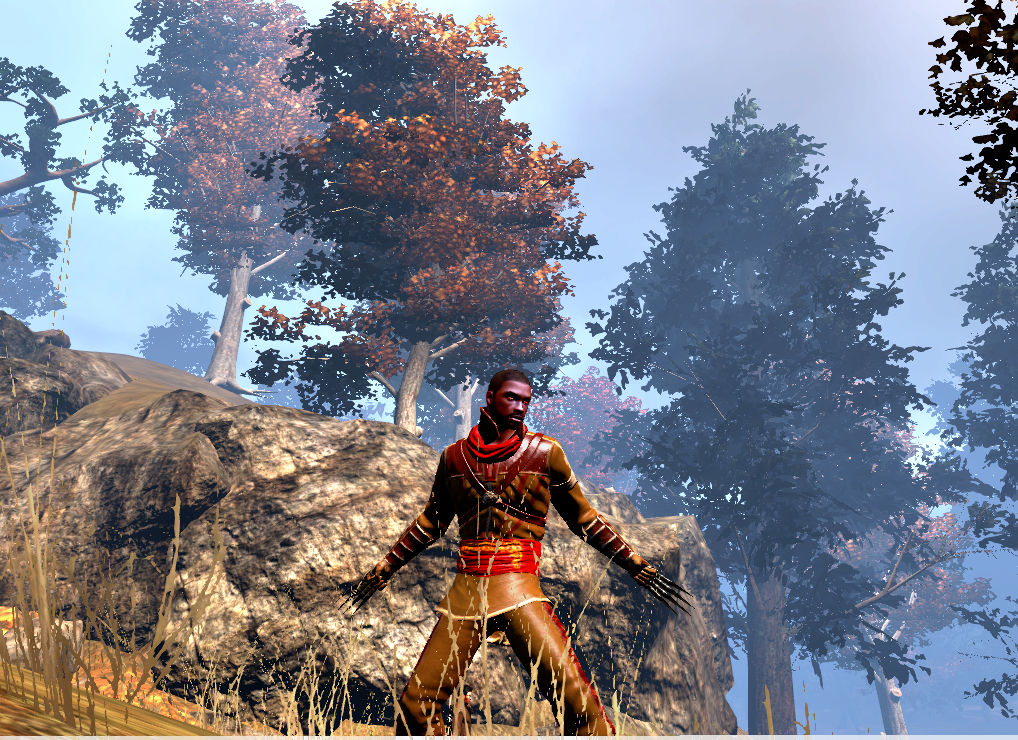 Seriously, just play the trial.


