
Have you ever thought to yourself, “Gee, you know what would make a great story? Harry Potter crossed with the movie Snatch.”
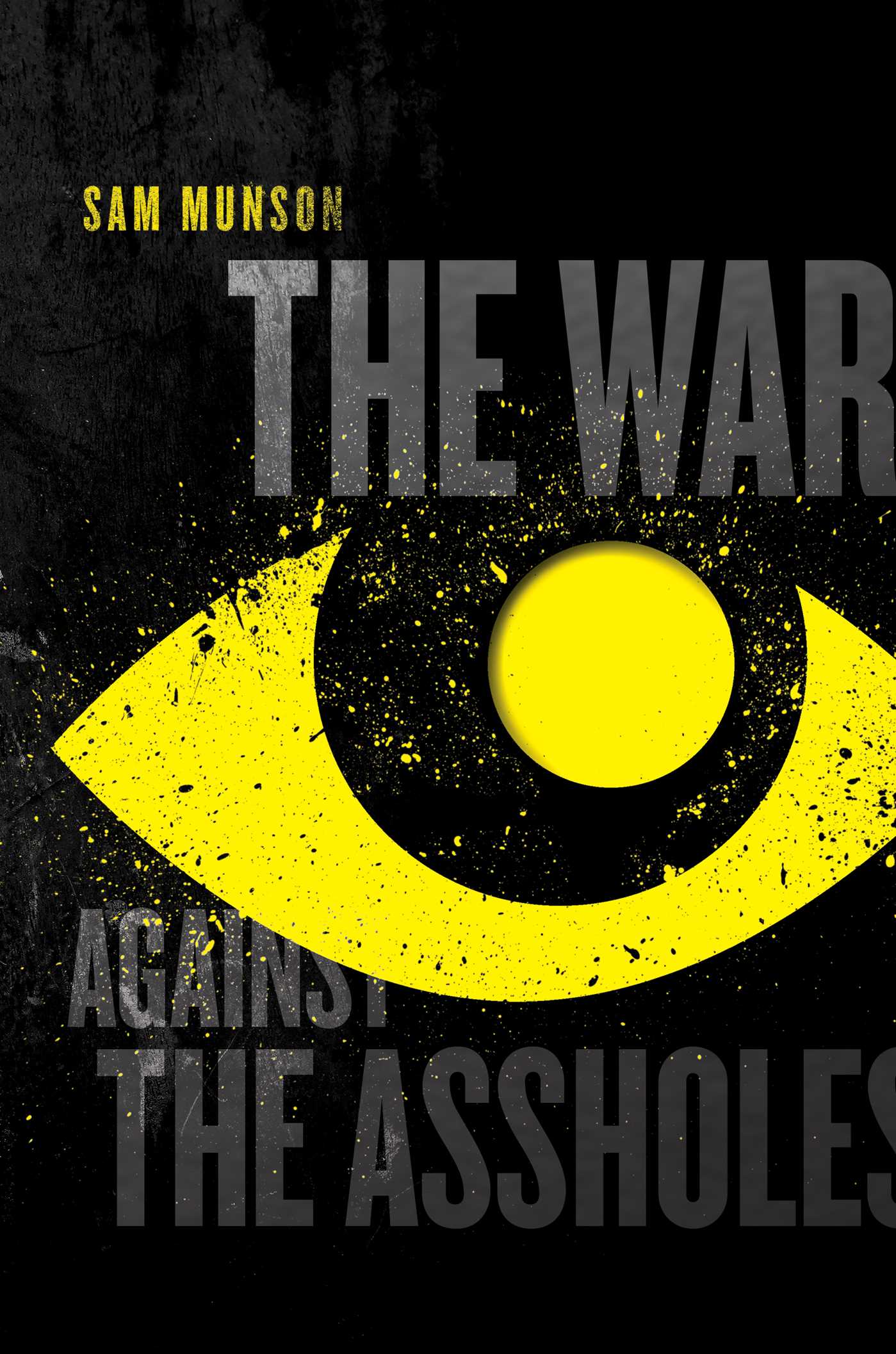 I’m guessing probably not. Unless you’re author Sam Munson, in which case you’ve not only had that thought (or something similar) but written and published it as a book.
And yes, the title really is The War Against the Assholes.
It’s one part teen drama, one part black comedy, one part gang war, one part urban fantasy, and one part… I don’t even know.
The story follows Michael Wood, a jockish teenager attending a fancy Catholic school in New York. An encounter with a strange boy named Hob ushers Michael into a gang of rogue magicians.
They live in defiance of the secret magical hierarchy that has reigned over the world for centuries. These individuals are properly referred to them as theurgists, but Hob refers to them as assholes, and the name sort of sticks. To be fair, it’s not an inaccurate descriptive.
Above I compared The War Against the Assholes to Harry Potter, and there is definitely a resemblance. There is a lot of teen drama and coming of age themes here, albeit presented in a deliberately crude and often borderline twisted manner. The conflict between Michael’s gang and the “assholes” also sometimes seemed to amount to a contest between rival high schools, albeit a deadly one.
So basically Harry Potter with much more sex, drugs, booze, and violence.
It also reminded me of the Black Company novels in some ways. There’s that same deadpan, sardonic mannerism to the writing, the same twisted sense of humour.
As the Black Company comparison might imply, the prose is one of the strong points of The War Against the Assholes. Yet it’s also a weakness.
Specifically, the dialogue is handled in an unusual manner, and it’s quite disruptive. Instead of each line being its own paragraph, or spaced out any other way, the dialogue is just jammed into the middle of paragraphs, with lines from different characters coming back to back often with inadequate clues as to who’s saying what. It’s very confusing, and it gets tiresome.
 I suspect this was a conscious decision on the author’s part. The book is told in first person perspective, and Mike is, by his own admission, not terribly bright. But intentionally writing the book poorly in some ways, while an admirable effort towards verisimilitude, still does more harm than good.
Since we’re on the subject, Mike just isn’t that compelling of a character. He’s ultimately little more than slow-witted thug, and his main virtues as a member of the magical revolution is that he is both very capable of and very willing to hurt people when the situation calls for it.
By far the biggest flaw of The War Against the Assholes is that its main character is also its least interesting character by a wide margin. I would have much preferred a book from the perspective of, say, Hob, or Alabama the gun-toting sorceress.
There are some other issues, too. The story flows oddly, with the most climactic events happening about halfway through and the story just sort of slowly petering out after that. The ending is also quite underwhelming and doesn’t provide closure to much of anything. Normally I’d say this is just leaving room for a sequel, and admittedly that remains the most likely scenario, but the whole of the book is just so odd I wouldn’t be shocked if it turns out that really is it.
That said, the book still has many strengths. It’s funny, it keeps you guessing, it’s extremely original, and aside from the dialogue issue, the prose is very clever and a joy to read.
Something else that impressed is that despite the book’s irreverent attitude and real world setting it still manages to evoke the sense of awe and wondrous beauty that lies at the heart of the fantasy genre. I can’t call out specifics without getting into spoiler territory, but there are scenes in this book that left me genuinely awestruck.
The War Against the Assholes is not a book that I would recommend to everyone. Its graphic subject matter and relentless oddness would definitely turn off more than a few people. But I enjoyed it, and it deserves major credit for being different.
Overall rating: 7.7/10 Abracadabra, bitches.


 Superior Realities