
You know the drill: Spoilers incoming.
 “Minute by Minute”:
The spectacular second season finale provided a tough act to follow, but “Minute by Minute” makes an admirable effort.
The episode picks up immediately after the end of the last season — quite cleverly — by seamlessly continuing from the “previously on…” sequence, showing Alec arriving one week in the past. Sure enough, Emily is still alive — and now we have two Alecs running around.
Alec does his best not to interfere with history too much, but it doesn’t take long for his meddling to have dramatic effects. Kellogg’s fear of Escher is made even stronger than it was before, with deadly results.
Meanwhile, a week into the future and along a different branch of the continuum, Kiera meets with her Freelancer captors, who seek to recruit her to their cause.
In the process, we finally learn the true nature of the Freelancers — or at least their version of it. They are a thousand year-old order dedicated to mitigating the damage to the continuum caused by time travelers. Interestingly, most of them are not from the future, though their technology is.
 Kiera is initially unwilling to sign on with them, but when Alec’s meddling causes all of time and space to begin collapsing around her, she has little choice but to accept. She is officially initiated as a Freelancer and sent back in time one week, where she commits suicide.
Not in the way you’re thinking.
This is a very strange episode, and it seems to signal a change in direction for Continuum. Things are a lot more complicated now, and the sci-fi is front and center in a way it hasn’t been before. Now that Kiera is a Freelancer, she’s even less of a hero than she was before, and I suspect things may take a darker turn.
But I’m not complaining. Time will tell (ha) whether the show actually does change direction in a significant way, or whether the new direction is a positive one, but right now, I am cautiously optimistic. I’ve said before that Continuum started life as little more than Cops and Robbers with more technobabble, and while that was plenty entertaining, it isn’t a concept with a lot of legs. That the show is now building a more complex and distinctive mythology can only be a positive.
It’s also interesting that Garza now finds herself indebted to Kiera. That could go interesting places…
Overall rating: 8/10
“Minute Man”:
Okay, I was wrong. Kiera didn’t kill herself. That scene was misleadingly shot. At any rate, we know have a mystery of who murdered the other Kiera. Hints point towards Kellogg, but it’s hard to say for certain.
 At the same time, Jim finds himself hounded by a vengeful Liber8 after his betrayal. He seeks aid from the cops, but finds little sympathy from them. It seems Vancouver may once again be short a mayor.
Kellogg seeks to coerce Emily into working for him as she did for Escher. She initially refuses, but it turns out she was Escher’s killer, and when Kellogg threatens to reveal to Alec that Escher was his father, she has little choice but to agree to his terms.
Kiera and her Alec are forced to carefully dance around the past Alec so he doesn’t find out about his future self. Kiera has nothing but venom for her Alec after he double-crossed her, which strikes me as unfair of her. I think anyone would have made the same decisions he did.
“Minute Man” is also the first episode of Continuum to feature a proper opening credits sequence, which feels a little overdue.
I worry it’s a bit early to be casting broad generalizations about this season, but so far, I find season three has definitely had a very different feel to past seasons. Things seem a lot darker and more complex.
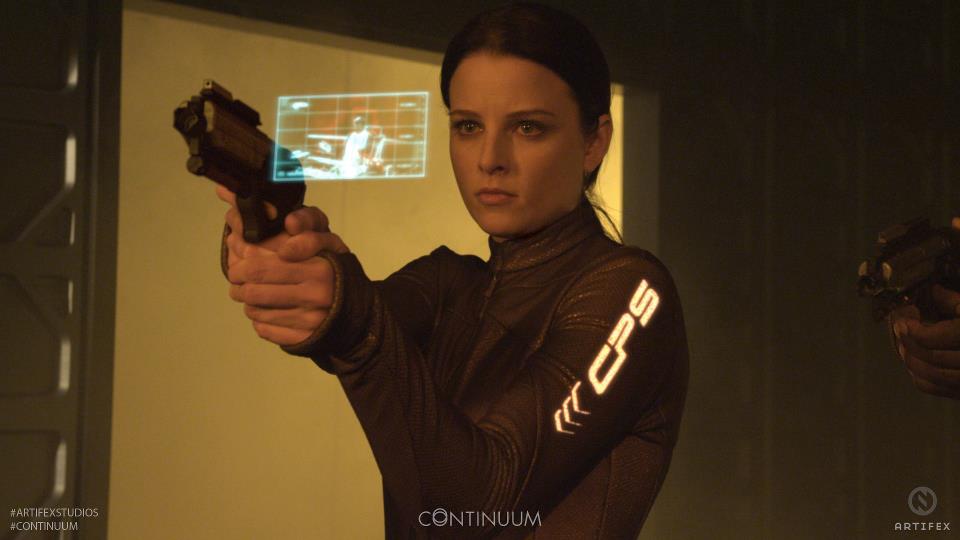 The characters have lost their camaraderie, and everything is uncertain. Kiera has become bitter and angry. I’ll need a few more episodes to determine whether I like this new direction better or not, or even if it actually is a new direction or just a quirk of the first couple of episodes. It’s smarter, but also less fun.
Overall rating: 7.2/10
“Minute to Win It”:
After a nice rest cure in an institute for the criminally insane, Lucas is back, and he helps Liber8 to carry out a series of bank robberies targeting corporate secrets.
Alec Original Flavour has a series of shocks when he finds out that Mr. Escher was his father, that he left Piron to Alec, and that Emily is not who she has claimed to be. For her part, Emily is confronted by New and Improved Alec and learns that he traveled through time to save her… and that there are now two of him.
Meanwhile, Carlos struggles to cope with the death of one of the Kieras.
This should have been a good episode, but there’s too much that makes little or no sense, and that drags it down. Lucas’s insanity has vanished, seemingly cured by some magic of Sonya’s, but this isn’t well-explained. And if Liber8 could just brainwash people, why did they need to stage these elaborate robberies to begin with?
 Kiera should be freaking out at the prospect of Alec taking over Piron, considering that’s yet another step away from her future, but she actually encourages him to accept the offer and seems glad about it. Carlos’s craziness feels odd, too. I can see the death of Kiera 1.0 shaking him up, but I don’t see why it’s making him lose his marbles to the extent it is.
Overall rating: 6.9/10
“Minute Changes”:
This is another episode so busy and packed with awesome I can’t believe they managed to fit it into an hour.
Much of the plot of “Minute Changes” deals with unrest upon a nearby university campus, where several students have begun speaking out in favour of Liber8. The situation deteriorates, and before long, students are lying dead in the streets. The cops claim they were defending themselves, but the evidence doesn’t support that claim.
The bloodshed causes the Sultan of Sleaze, Julian Randal, to come out of hiding and once again prove himself be a being of pure spite, pettiness, and douchey smugness.
Kiera is torn. She has little sympathy for anyone who supports Liber8, even in the most minimal way, and her futuristic ideology puts little value on truth or equality, but she is still a basically moral person, and she can see that what the cops are doing is wrong.
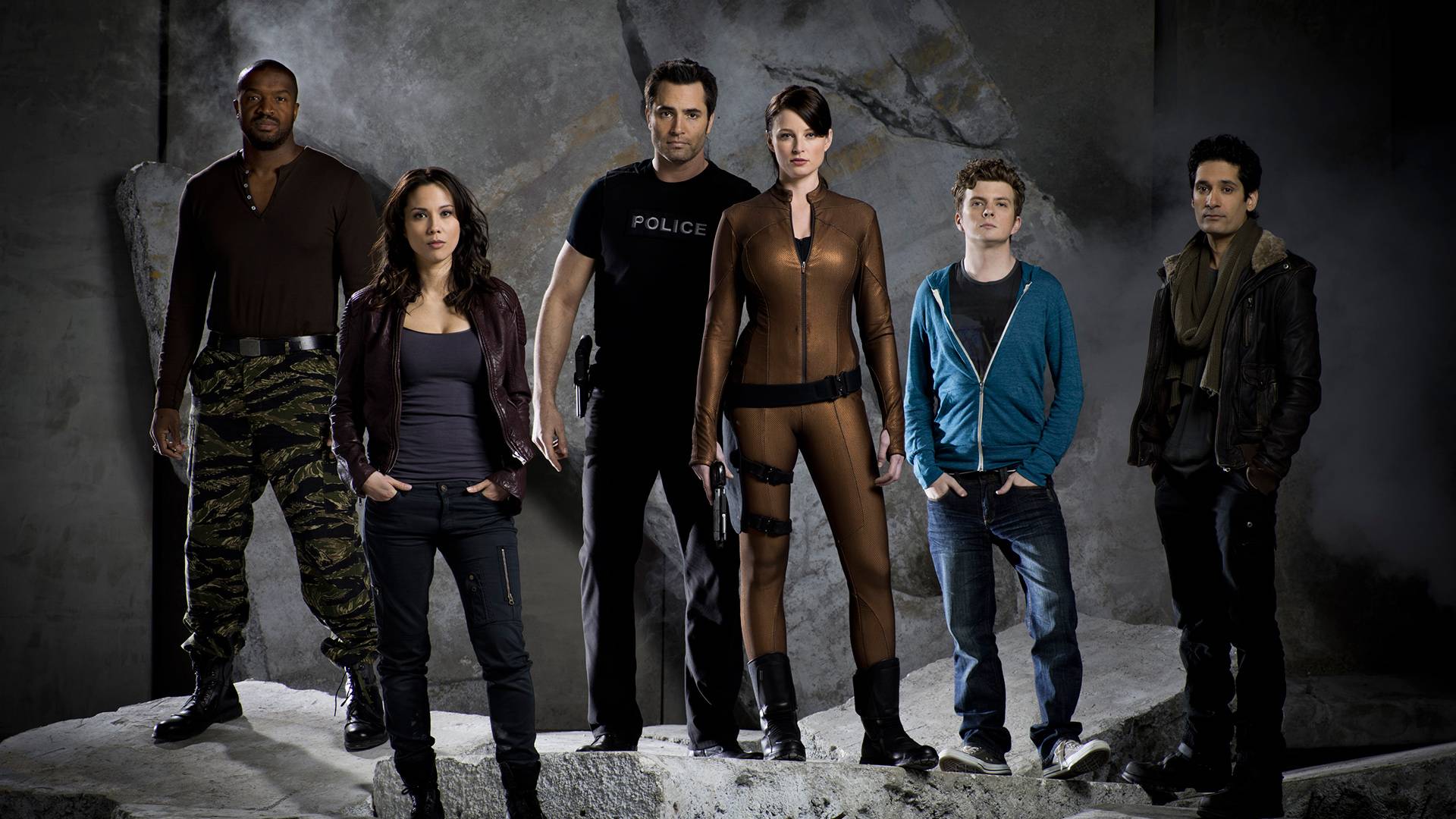 Carlos also finds himself painfully conflicted. On top of the campus shooting, he continues to obsess over the death of Kiera 1.0 — a plot that still feels strange and contrived to me — and the investigation into the Liber8 sympathizers among the students at last brings to light Betty’s association with Liber8.
Elsewhere, Alec 1.0 is settling in as head of Piron and drawing ever closer to becoming his future self, a man who values technological progress ahead of humanity. He’s quick to burn his bridges with Emily, allowing him to focus on the ruthless pursuit of discovery. And in the process, he learns of the existence of his other self.
This was easily the strongest episode of the season to date, despite the occasional hiccup like Carlos’s continued slip into madness. It is a very complex and morally gray story where no one is truly innocent, and everyone struggles to find out where the right path lies.
This episode makes the best use of the darker and more mature tone of the third season, elevating the concept of Continuum to their purest expression. It’s a clash of misguided ideologies, and no one’s hands are clean.
I also really enjoyed the plot following the two Alecs, and especially their fantastic confrontation near the end. It makes the fullest use of the potential of time travel as a plot device. It allows us to consider how minute changes (c wut i did thar?) can radically alter who a person is, and it cuts to the heart of what Continuum is about: the fight to define the future.
 Alec 1.0 is becoming a ruthless businessman, the author of Kiera’s twisted future, while Alec 2.0’s love for Emily shifts his priorities towards what really matters: humanity.
Overall rating: 8.5/10 Best line of the night: “They don’t have a Kirk. They don’t have a Picard. They barely have a Geordi!”
“30 Minutes to Air”:
This episode falls more into the category of filler, but at least it’s fun filler.
“30 Minutes to Air” sees Liber8 storm a TV station and begin taking hostages. Ostensibly, their plan is to broadcast a manifesto, but this is Liber8, so of course, it’s not that simple.
So basically it turns into Die Hard.
It’s a plenty entertaining episode. It just doesn’t do much to advance the plot or the character arcs. Liber8 uncovered a bunch of dirty corporate secrets, but they already had a nice collection of those.
The most significant thing to come out of “30 Minutes to Air” seems to be Alec 1.0 continuing to burn his bridges with everyone, even Kiera.
 My one significant complaint is that Dillon’s issues with his daughter, and the flashback to Travis’s family — Does Sonya know he had a wife? — didn’t seem to have any relevance to the rest of the episode, so they were rather odd bookends.
On the plus side, it was nice to see Carlos back on top of his game. Let’s hope his dead lady obsession is soon to be a thing of the past.
Overall rating: 7.2/10



 Superior Realities