
It’s been a long time coming.
 As StarCraft fans, we waited over ten years for a follow-up to Brood War, and as a Protoss fan, I had to wait even longer for the expansion that would at last put my favourite race in the spotlight.
It’s been a long time coming, but to paraphrase that most quintessential Canadian band, it’s well worth the wait.
The End War:
I enjoyed the first two installments of StarCraft II. Wings of Liberty had some flaws, but mostly it was a strong story that I enjoyed. Heart of the Swarm was somewhat of a disappointment, but even it had many highlights.
Legacy of the Void vastly outstrips both its predecessors. The fact I am a Protoss fan may bias me, but I think there’s a lot more to it than that.
LotV’s campaign begins with the full might of the Daelaam Protoss united at last, ready to retake Aiur from the Zerg and reclaim the pride and tradition of the Firstborn. But in remarkably little time, things go terribly wrong.
 Thus begins the End War, the final conflict with the void god Amon. Whereas the last two installments spread themselves thin over many stories that had at best only tangential relationships with one another, LotV focuses entirely on the conflict with Amon, and while it can at times feel a little abrupt or rushed, mostly it does an excellent job of selling the idea of a universe teetering on the brink of destruction.
Over the course of the campaign, Artanis must bring together the disparate tribes of Protoss, some familiar and some new in LotV, to forge an army capable of facing Amon. Something that I’ve liked about the Protoss from the start is that although they are a very alien race, they are also very diverse, with many differing viewpoints and philosophies within their ranks, and LotV builds on that well, further deepening the Protoss culture even as it goes through great changes.
Legacy of the Void is in many ways a story about multiculturalism and the strength it brings. Although its handling is at times somewhat inelegant, I think this is a very noble message to send, and quite relevant in this day and age.
The story doesn’t end with Legacy of the Void’s main campaign, though. There is also an epilogue campaign consisting of three missions that give you the chance to play as each race once more.
Actually, calling it an “epilogue” is perhaps a bit misleading, as it is every bit as epic and intense as the main campaign, and it at last brings a close to all of the story and character arcs that began all the way back in the 90s.
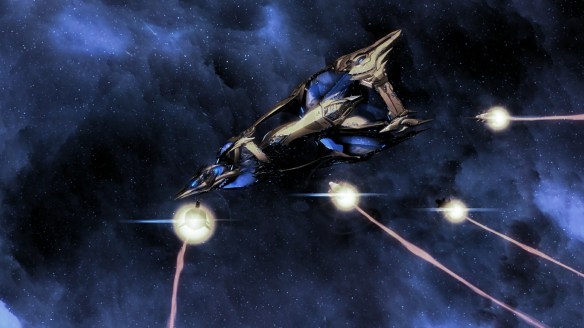 I was sufficiently impressed by that ending that I struggle to think of what to say about it. It was awe-inspiring. It was emotional. Most of all, it was immensely satisfying.
The mechanics of storytelling were also better than ever this time around. Cinematics are as ever a feast for the eyes, and they are both incredibly numerous and more seamlessly integrated than ever before. At times, cinematics even play in the middle of missions, shifting from gameplay to cutscene and back with total smoothness. Very impressive.
That’s not to say the entire campaign was perfect. I can poke some holes here or there.
By far my biggest complaint is how small a role was given to Executor Selendis. Blizzard has spent years dropping hints that she was going to be a big deal in the coming story, but in actuality she appears in only a handful of missions, and then in a relatively small role.
I also had issues with some of the ways the Protoss culture changed over the course of the campaign, including but not limited to the fact they tend to happen a little quickly and/or with poorly explained reasoning.
Still, on the whole, it was definitely the best part of the StarCraft II saga, and possibly the best installment of the franchise to date. Definitely a worthy end.
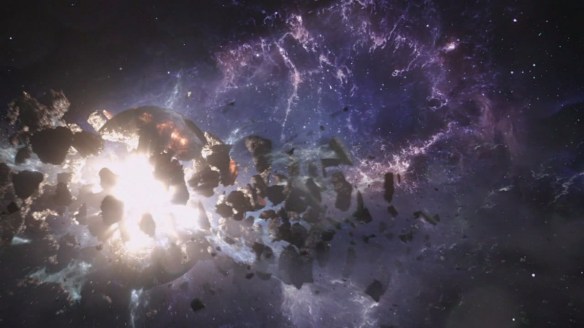 …Except it’s not the end; story DLC is already on the way, which is now giving me mixed feelings. On the one hand, yay, more StarCraft. On the other, there’s pretty much nowhere to go from here but down.
RTS done right:
From a gameplay perspective, Legacy of the Void’s campaign is also a step up from its predecessors.
Wings of Liberty and Heart of the Swarm had excellent mission design, bringing a breath of fresh air to the sometimes stale RTS genre, but they relied too heavily on missions with some sort of time limit. Every level was a sprint the finish, and it became exhausting after a while.
LotV still has some missions like that, but they’re not as omnipresent. There are a lot more missions that allow you to take your time, plan your strategy, explore the map, and gradually fight your way to victory. There’s still a lot of fresh ideas, but it also brings back some of the long, epic battles of more old school RTS games. It’s the best of both worlds.
I was quite disappointed to not see the return of hero units as seen in Heart of the Swarm, but being able to call upon the abilities of the Spear of Adun is a decent substitute. They’re similar to the god powers of Age of Mythology, but with the advantage of not being limited-use.
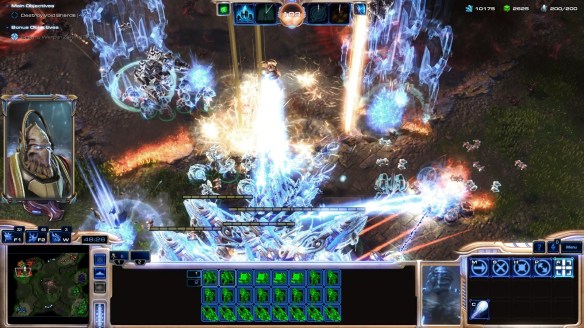 I also greatly enjoyed the mechanic for customizing units this time. Instead of upgrades in the traditional sense, each unit has three variations based on the various Protoss factions, each with different advantages. You can swap between different variations between missions, so there’s a lot of encouragement to experiment and tailor your forces to a specific challenge.
If I have a complaint about the campaign’s design, it’s that it takes a little too long to unlock more advanced units and abilities early on. It makes a certain degree of sense from a story perspective, but after two games, I’m kind of over the “slowly build up your forces from nothing” angle. Let’s cut to the chase, shall we?
Multiplayer:
I dipped my toes into competitive play for the first time in years, but I didn’t stay long enough to get a comprehensive view of what Legacy of the Void has brought to the table in that regard.
I will say that I think the economic changes are very good. They cut down on a lot of the tedious downtime at the start of a match and allow you to get to the action more quickly. If anything, they don’t go far enough — there’s still too much economic busywork in this game.
But mainly what I learned is that I’m still terrible at competitive StarCraft II, and still lack the emotional fortitude to deal with the high stress of it all. Especially now that the game is faster than ever.
 To their credit, Blizzard has put some effort into opening avenues of multiplayer that are not so intense. Archon mode allows two players to work in tandem, splitting the responsibilities of running a single army. Cool idea, but to me it just sounds like you’d constantly be stepping on each other’s toes. Doesn’t appeal to me.
More interesting to me are the co-op missions, which allow two players to work together against the AI using powerful units and abilities from the campaign. These don’t replicate the campaign experience as well as I was hoping, and I feel they’re best played with a friend, but they’re still pretty fun, even if you’re playing with a stranger.
On the whole, I’d rate co-op missions the most positive addition to SC2’s multiplayer.
* * *
With a stellar campaign and some solid changes to multiplayer, the final installment of the StarCraft II trilogy is also by far the best. This is why I’m such a big Blizzard fan; they may screw up a lot, but when they get it right, they get it right.
Overall rating: 9.5/10 Possibly the best Blizzard game since Warcraft III.
 “Bleeding Through”:
 Thus far this whole Wicked Witch arc has been decidedly underwhelming, but “Bleeding Through” is pretty good, perhaps due to a strong focus on Regina. It was very strange but also very enjoyable to see her and Snow bonding so much, and I really liked Snow’s assessment of Regina as a person at the end.
 But Zelena isn’t about to let that happen without a fight, and between that Hook continuing to be really quite awful, Emma and company are going to have a rough ride.
 Sorry, but there’s just no other word for it at this point. Charming insists that Emma bring Hook when she goes to confront Zelena, even knowing Hook can destroy all of Emma’s power. That’s idiotic.
 All seems well in Storybrooke. But Emma is not content. For reasons that are not entirely clear, she’s planning to abandon Storybrooke and her family and take Henry back to New York, despite the fact that no one wants this, least of all Henry.
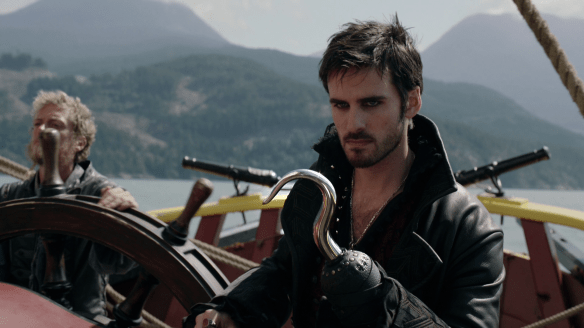 The final episode of Once Upon a Time’s third season is pretty much a continuation of the last one. Which is not a good thing.
 The woman Emma rescued being Maid Marian is also a very good twist. I just hope it doesn’t once again reset Regina’s redemption arc.
