
If you’ve followed this blog for a while, you know that I wasn’t exactly blown away by Neverwinter when I tried it, despite its thrilling combat and a few other positive features. You might also remember that I have nonetheless been tempted to give it another go.
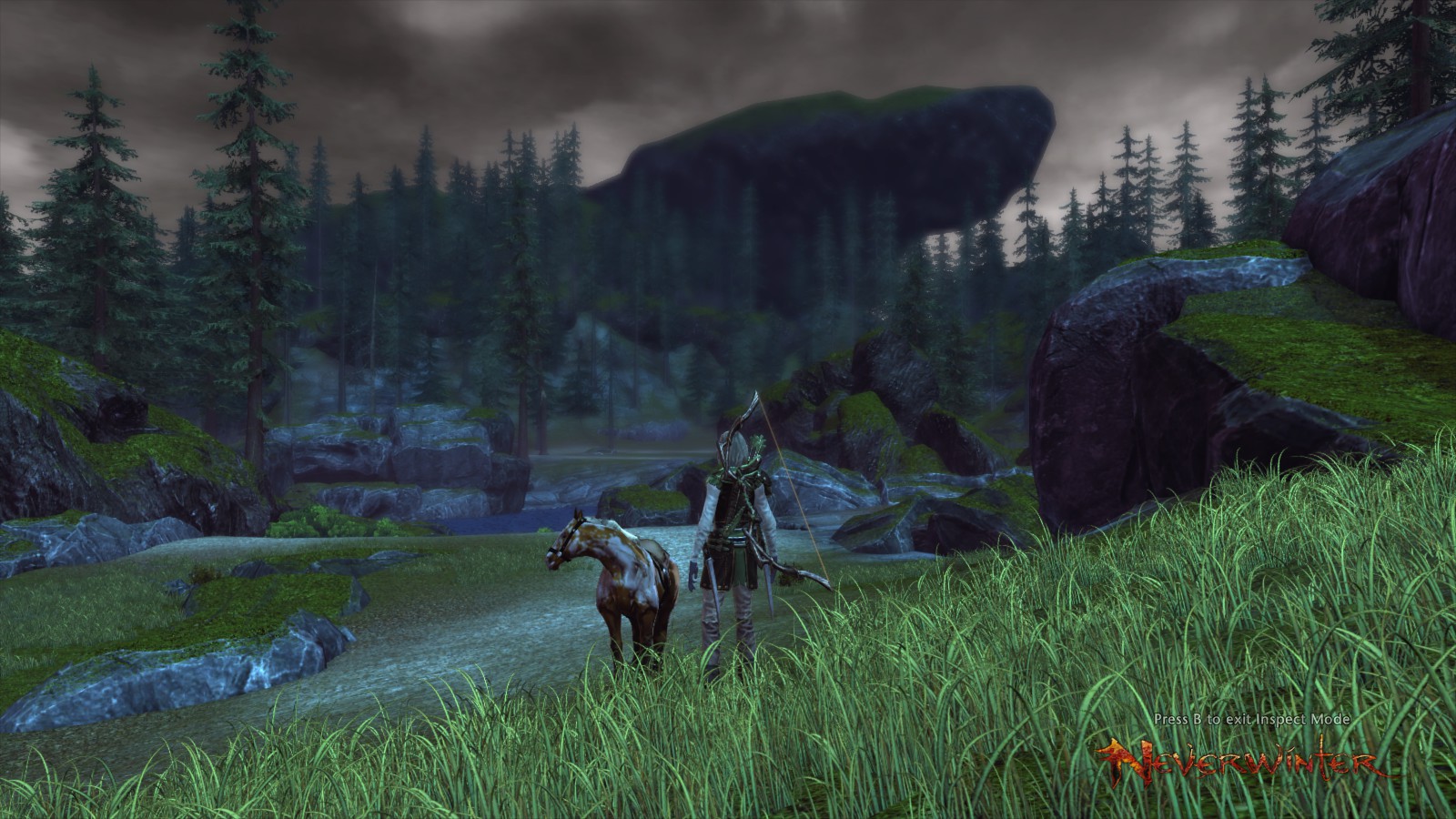 The addition of the new hunter ranger class finally spurred me to return to the game and give it another shot. I’ve been playing heavily for about two weeks now, and I’ve come to the conclusion that Neverwinter is a very odd game. In many ways, it is quite tacky and amateurish, but in others, it’s incredibly good.
Good: The hunter ranger
You know how I’m always ranting about how lame archer classes in MMOs are, how they tend to be gimpy turrets who have to cower behind pets and avoid close-quarters combat at any cost? How they’re always fit into an incredibly narrow box with no diversity or creativity in their abilities?
My prayers have been answered. The hunter ranger is not quite my perfect ranger class, but it’s pretty damn close.
For starters, Cryptic is one of the few developers to remember that rangers are supposed to be versed in many styles of combat. They’re not just archers. The hunter ranger can not only freely swap between bow and blade at any time, but are actively encouraged to by the class mechanics.
Their versatility doesn’t end there, either. Single target attacks, ruinous AoE damage, gap-closers, gap-openers, stealth, self-healing, group buffs, magic… The hunter ranger does it all. It’s like if a Swiss army knife was a playable class.
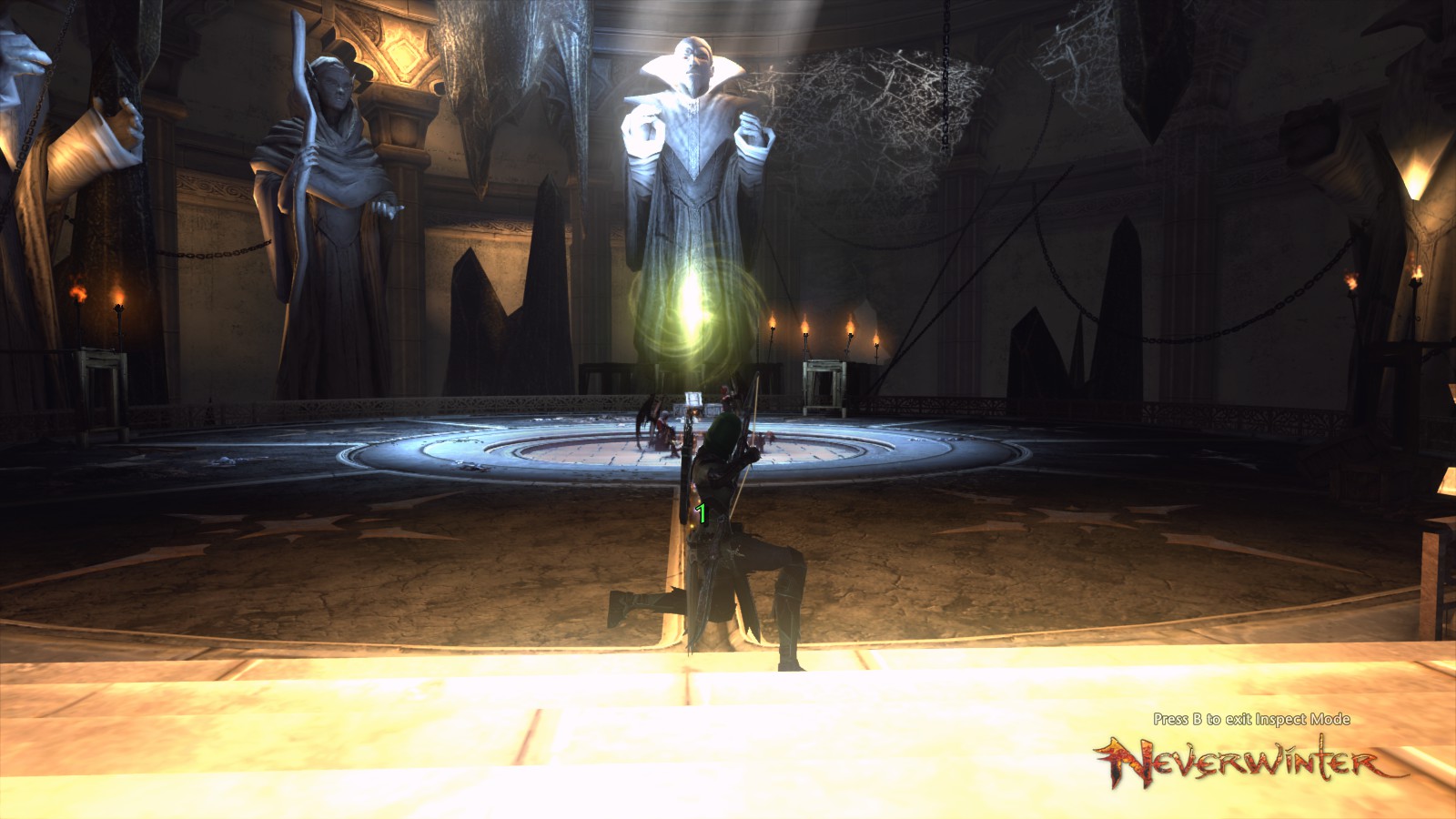 They’re not tied to pets,* and there’s actually creativity in their abilities. Far from being limited to just shooting arrows in various colours, I can also summon plant wards to assault nearby enemies, impale enemies with vines bursting from the ground, or even summon mighty thunderstorms to assault my enemies.
*(No more than any other class in the game, but companions lack many of my annoyances with traditional MMO pets.)
Even the more generic abilities are made interesting by clever mechanics or awesome visuals. The hunter ranger has the standard “multi-shot” AoE attack, but with a twist: The longer you charge it, the more damage it does, but the less area it covers. So you have to carefully time your release to ensure you hit as many enemies as possible while also doing as much damage as possible.
They also have a backwards leap similar to the disengage ability used by WoW’s hunters, but instead of just lamely leaping backwards, my character rockets away from enemies in a burst of emerald nature magic, leaving behind a flurry of leaves and numerous after-images of my character in dramatic poses.
MMO developers of the world, take note: This is how rangers should be done.
Bad: The business model
I think I’ve established myself as an apologist for the free to play model at this point, but even I have limits. Neverwinter hasn’t passed those limits yet, but it’s come really, really close.
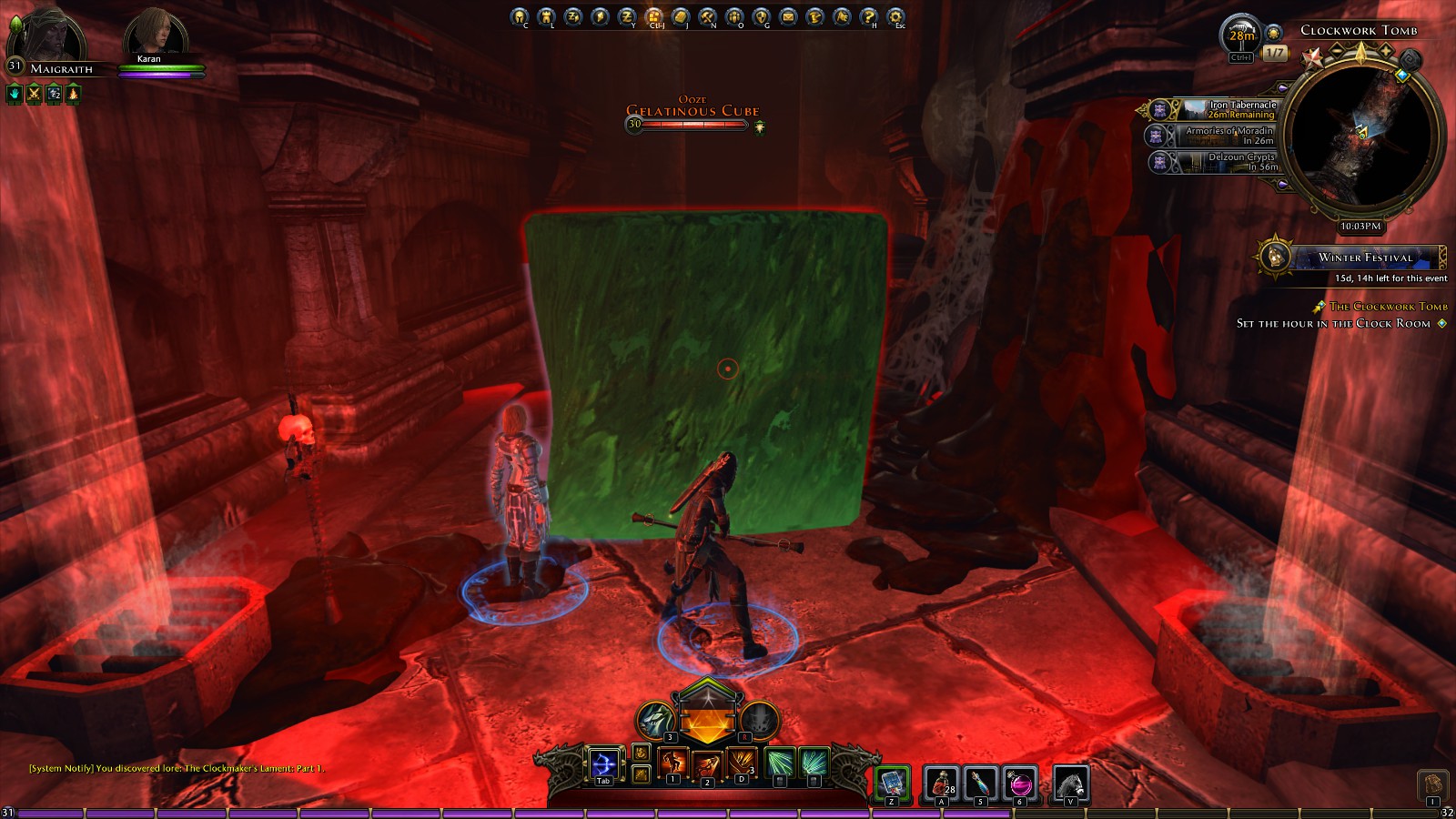 As a free player in Neverwinter, you will be held back in virtually every area of the game. If you want to be the best, you need to pay, period. Now, Cryptic restrains from completely crippling free players. You can still progress in the game and compete decently well without paying. You’re just going to run into a lot of speed bumps. A lot.
Theoretically, you can get all the paid stuff for free with astral diamonds — a bizarre currency that serves most of the purposes gold would in an another game — but the grind required to do so is astronomical — pun intended.
Getting paid items for free is made even more impractical by the fact that very nearly everything in the game has an astral diamond cost attached to it. Most of these costs are conveniences and can be avoided, but it’s yet another speed bump. This, too, is a roundabout cash grab, as players can buy cash shop currency and then sell it to other players for AD.
Again, the AD grind isn’t enough to break the game. It’s just annoying.
What’s bugging me the most is upgrading my companions — NPCs that assist me in combat. Like gear, companions come in various quality levels, which determine their maximum level. The only free companions that aren’t freakishly hard to get are white quality, meaning they cap out at level 15 — purple companions max out at 30.
You can upgrade companions with AD, but again, grind. The maximum AD you can earn for free in a day is 24,000 (I’ve never even come close to getting that in a single day). It costs 300,000 to upgrade a companion from white to green, and around 1.5 million to fully take a companion from white to purple. I have four companions.
 Do the math.
[Edit: Slight correction to make. There is a way to exceed the 24K daily limit on AD: Sell items on the auction house. I forgot to mention it because this hasn’t proved to be a useful source of AD for me, but maybe I’m just doing it wrong.]
You don’t really need to upgrade your companions — white companions still do decently well even at max level, I’m told — but in a way, that’s what’s most frustrating. Why put such a grind on something so minor? All I really want is to unlock some prettier outfits for my companions. I’ve gotten attached to the little rascals. I’d like them to progress along with me.
At least you can vendor or delete lockboxes now.
Bad: Leveling content
One of the main things that drove me away from Neverwinter the first time was how bland most of the content is. It’s all incredibly generic, and the stories are even worse than I remember — bland, cheesy, predictable, and rife with poor writing and amateurish voice-acting. Jesus, I got better voice actors when I did that audio drama series, and I wasn’t even offering any pay.
In fairness, the group content’s a bit better. It’s not stellar, but it’s good enough. Skirmishes are quick little lootfests for when you’re bored, dungeons are lengthy and packed with epic fights, and the PvP is still surprisingly fun. None of these things are enough to make the game worthwhile, though, even taken all together.
But Neverwinter has one saving grace.
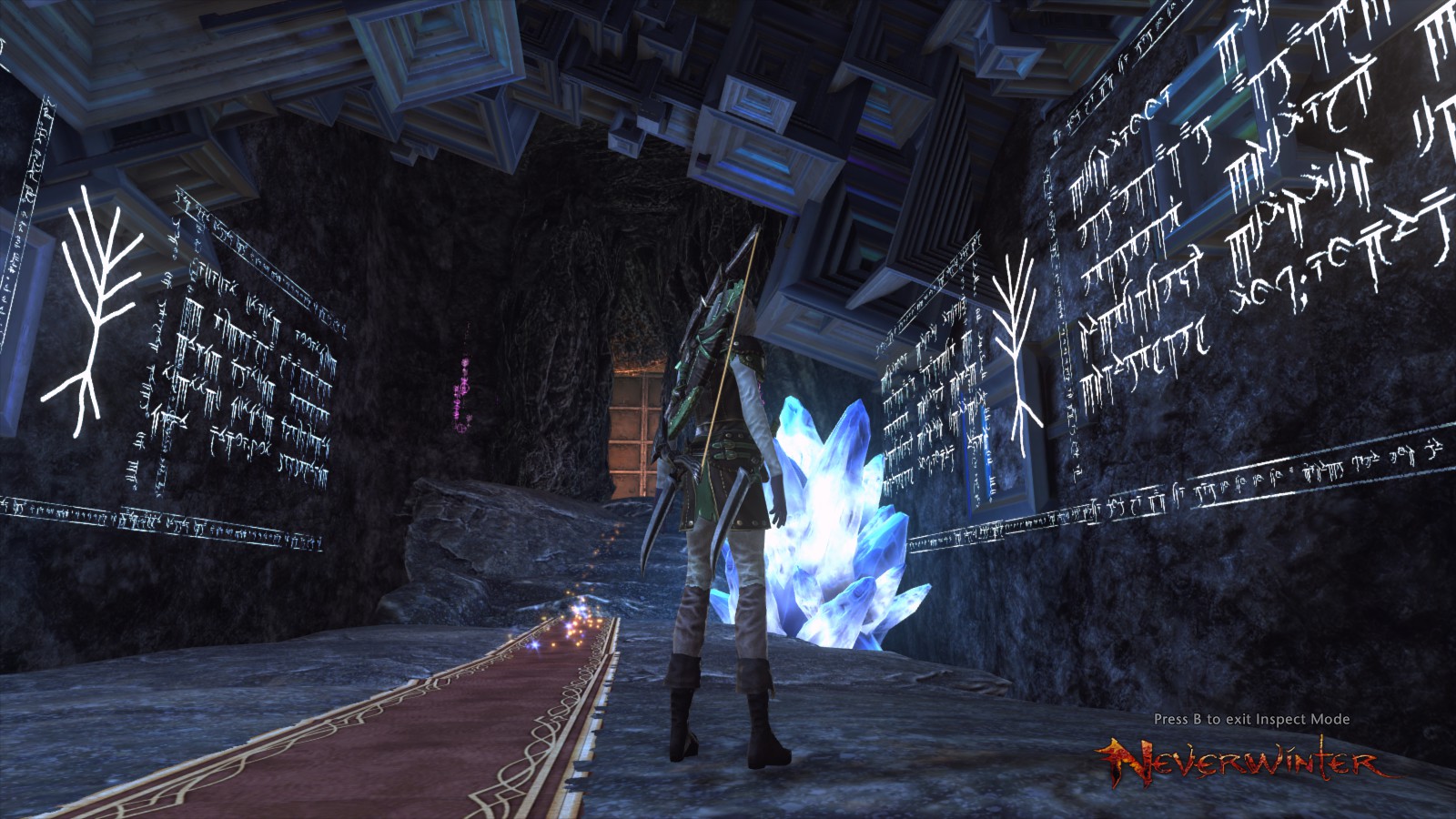 Good: The Foundry
I’ve realized I had the wrong idea when I played Neverwinter before. I was using the player-made Foundry to break the monotony of the professional content. This time, I’m using the professional content when I want a break from the Foundry, and it’s making a big difference.
There are a lot of MMOs that have seemed to bank on one or two unique features to compensate for their otherwise mediocre game. Neverwinter may be the first game to succeed in that strategy.
It’s hard to find words to do justice to how awesome the Foundry is. A virtually unlimited source of high-quality content with enough variety to suit most every taste. How can you not love something like that?
I’m continually blown away by the quality of content some fans can create. Not only are these quests better than the professional ones in Neverwinter, they’re better than most MMO quests I’ve played, period.
One of the first ones I played after returning almost could have given The Secret World a run for its money. A moody, horror-themed dungeon crawl with spooky ambiance, plenty of action, and an epic conclusion featuring a battle for control of my own mind within a surreal dreamscape.
 (It’s called “A Clash of Wills,” if you want to check it out.)
Not all are that good, but it’s rare for me to play one that isn’t at least decent. Yes, it’s true that there are plenty of nimrods churning out mindless mob grinders and worse, but the sorting functions make it easy to avoid most of the lower quality quests.
The Foundry makes all of the game’s other flaws bearable. Foundry quests rarely offer significant challenges or travel time, so all of the hobbling effects of its business model have little or no impact if you focus on Foundry content.
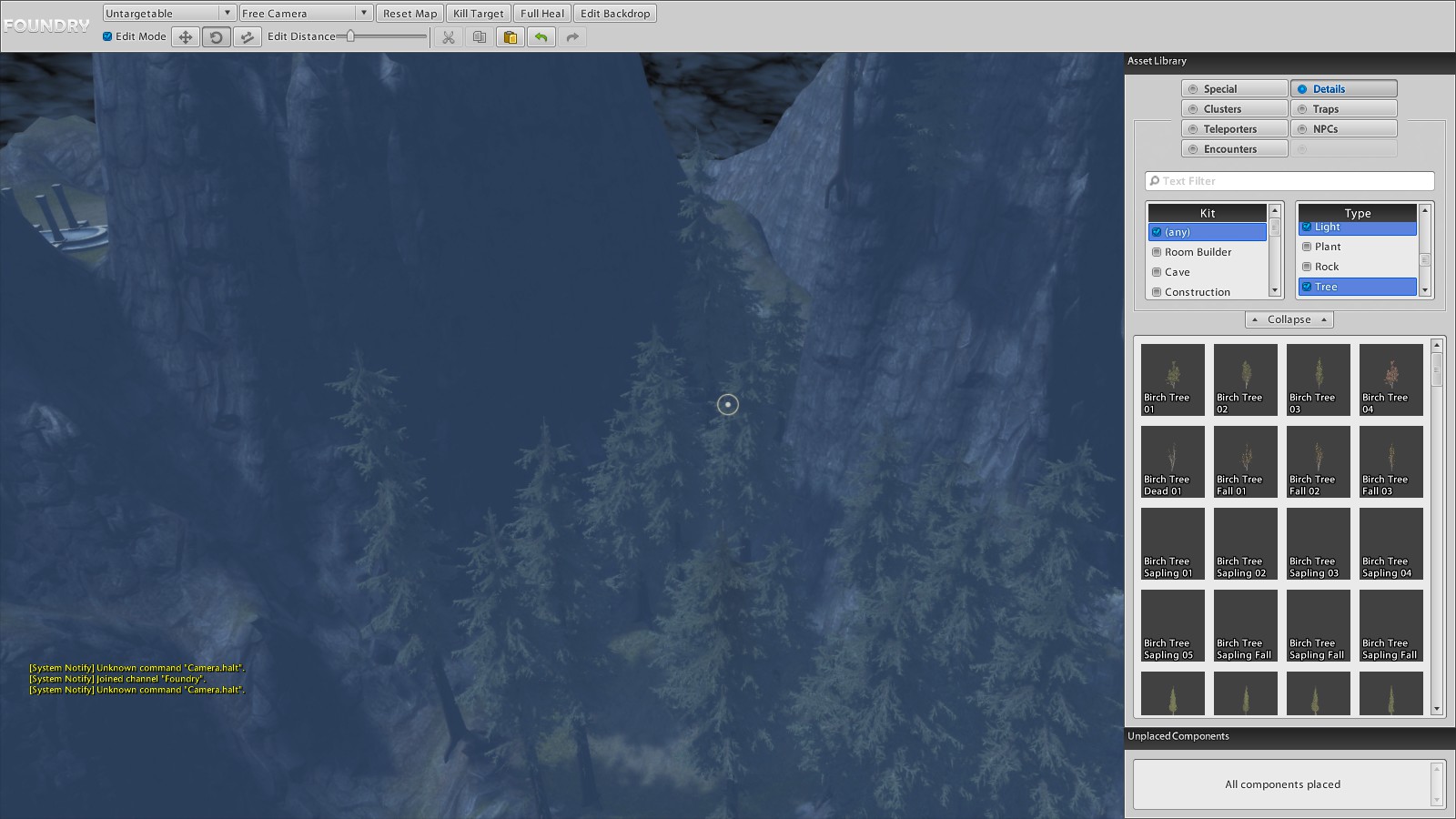
This time, I’ve also tried making my own quests with the Foundry. I started with a very basic quest to learn the ropes (“Shrine of Atonement”), and I’m now working on a much more ambitious dungeon crawl featuring multiple custom maps and unique enemy models, optional objectives, a bone-chilling story, and even a few simple puzzles. I’m calling it “Birth of a God,” and I’m hoping it will be up for review soon.
The Foundry is incredibly easy to use, if a tad time-consuming. There are a few things that seem mildly counter-intuitive (like the fact that you’ll be doing most of your designing via the “play map” feature), but once you figure those out, it’s smooth sailing. 90% of the work can be done via dragging and dropping or basic text editors simpler than the WordPress HTML I’m using right now.
I’ll also give them some credit for not attempting to monetize the Foundry in any way. No payment whatsoever is needed to get the full benefit of it, as a player or a designer.
 Conclusion:
Neverwinter is a bizarre mixed bag of a game. It’s hard to imagine how the same company could produce awesome things like the Foundry and the hunter ranger, and craptastic things like… nearly everything else about Neverwinter.
However, for now, I am finding that its strengths outweigh its flaws. Not by a lot, but by enough.
I think the best way to think of it is thus: Neverwinter is not a good game. However, it is an excellent platform for the creation and distribution of player-made content. If you think of the Foundry as the heart of the experience and everything else as bonus frills, then it’s actually a lot of fun.



 Superior Realities