
I don’t consider myself an especially skilled or “leet” gamer, yet I have overcome some impressive challenges in my time. I beat both StarCraft II campaigns on brutal. I soloed the Girl Who Kicked the Vampire Nest in The Secret World, pre-nerf, in poorly itemized green gear while coping with game-breaking lag. I soloed the last stage of Jin’do the Godbreaker on my paladin after my entire party died.
 Yet in all the years and all the games, I have faced no challenge greater, nothing that intimidated me more, than logging into Life Is Strange to pick up after the end of chapter three.
I heard going in this was a very powerful game. People said to keep a box of tissues handy when you play. Yet as intense and emotionally exhausting as the first two episodes were, I still ended up feeling like things had been exaggerated a bit. “It isn’t that bad,” I thought.
So wrong. I was very wrong.
This game will break your heart. It will burn your soul to ashes. It will crush your dreams and leave you a gibbering, broken shadow of the person you once were.
But wait. I’m getting ahead of myself.
I’ve been interested in Life Is Strange since it was announced. I thought Dontnod’s last game, Remember Me, was excellent, and Life Is Strange had an interesting premise, so even though it wasn’t my usual cup of tea in terms of mechanics, I put it on my “must play” list.
I’m not keen on the episodic format for games, though, so I figured I’d wait until all five episodes were released to start playing it. The fifth and final episode, Polarized, came out yesterday, so I finally got caught up and finished Polarized within hours of its release.
 Was a Hell of a ride, to put it mildly.
Life Is Strange follows Maxine Caulfield (Max, as she prefers to be known), a geeky photography student at an elite college in Oregon. Max suffers a terrifying vision of the town being destroyed by a freak storm, and thereafter, she discovers she has the ability to rewind time at will.
It doesn’t take long for her to put her powers to use, as she witnesses the murder of a young woman at the hands of a disturbed fellow student. Max turns back the clock to save her, but this is just the beginning of Max’s temporal odyssey.
The woman she saved turns out to be Chloe Price, Max’s childhood best friend, and the two join forces in the hopes of using Max’s power for good, investigating the twin mysteries of a missing student at Max’s college and the increasingly surreal environmental disasters that are plaguing the town.
Life Is Strange is one of the new breed of narrative-based games, meaning it has almost nothing that could be called “gameplay” aside from some very rare and simple puzzles or stealth segments. It’s basically a movie that requires occasional clicking and gives you some control over the course of the plot.
This isn’t necessarily a complaint, but it’s important to manage expectations. This is a game only in the loosest sense.
 Story is always what matters most to me in games, anyway, so it wasn’t too much an issue for me. In some ways it’s even better than the unhappy marriage of thick story and thin gameplay that Bioware tends to peddle.
It’s also a very artsy game. Part of what I liked about Dontnod based on Remember Me is that they very clearly believe in video games as art, but they may have gone a little too far with Life Is Strange.
I have mixed feelings. On the one hand, it’s a breathtakingly powerful and emotional game, and the characters feel real enough to reach out and touch them. On the other, the game often smacks of “trying too hard,” and far too much of Life Is Strange is spent on long, slow, pretentious montages that really don’t add anything.
There’s no better way to spoil art than to try to be artistic, and Life Is Strange does a lot of that. Which it really doesn’t need to, because it’s such an incredibly deep and powerful game without resorting to these affectations.
Also, I found some of the dialogue in the first few episodes a little dodgy. Trying to cram too much Millennial slang in there.
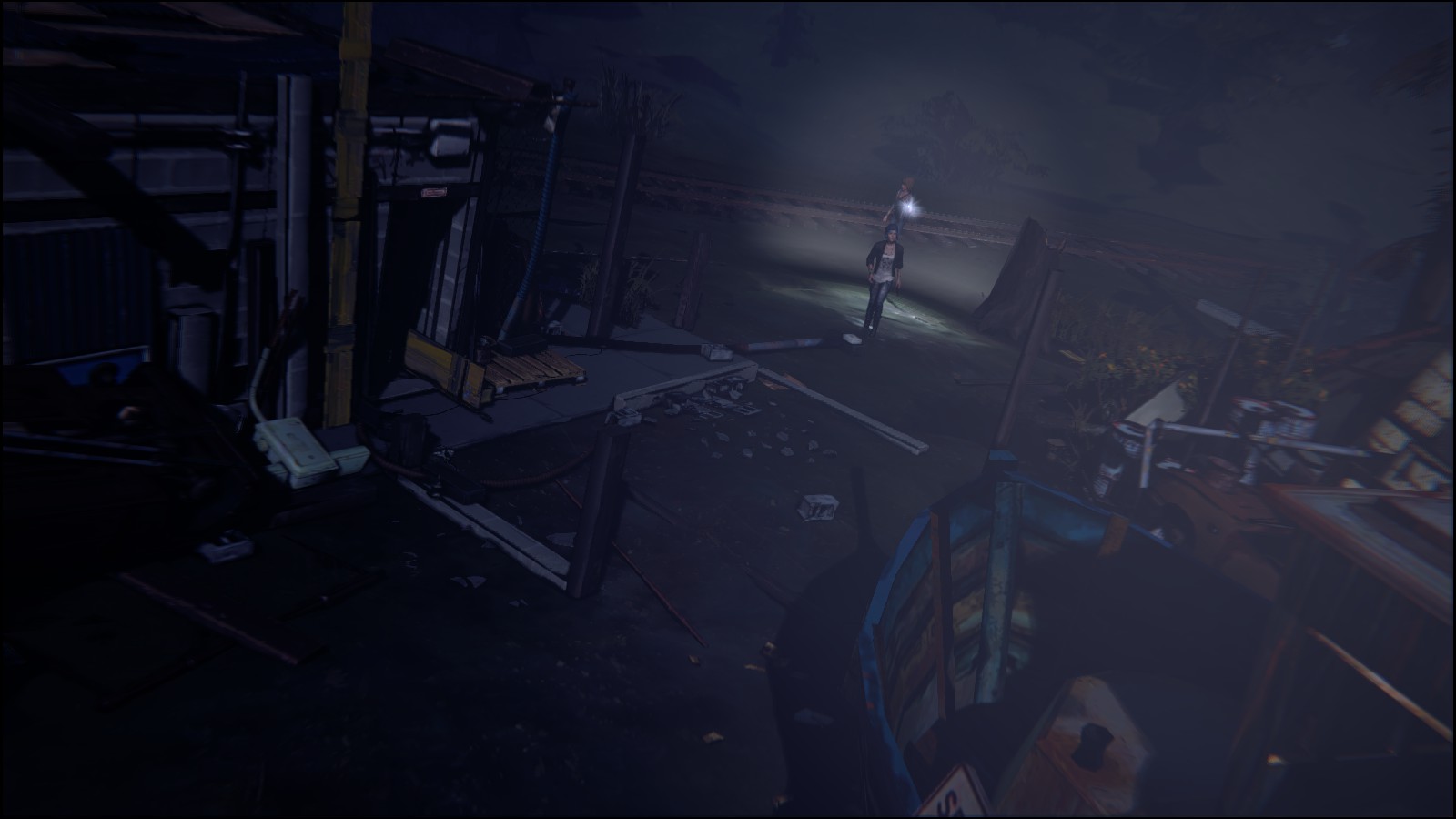 I could also poke some holes in the main villain, who ended up feeling rather odd and artificial, and it was all a bit cheesy compared to the rest of the game. But that ultimately is just a minor tangent to the game’s greater themes of choice and consequence.
I should also offer warning that this game deals with a lot of very dark real world issues, like abuse of girls on college campuses, drug abuse, and the like. Interestingly, the game also includes links to support groups related to some of the issues from the game, which is an interesting idea, though the cynic in me doubts anyone would actually be helped by this.
On the other hand, like Remember Me, Life Is Strange deserves credit for being pretty progressive, focusing on two very well written female characters and also dealing with diverse sexuality in a way that I think is very respectful. If you want a good representation of bisexual characters, I’d definitely recommend Life Is Strange.
The graphics are very stylized, beautiful in some ways but too cartoony in others. The music, well, it’s subjective, but I found it pretty bad. I have terrible taste, though, so don’t listen to me. The voice acting is stellar, though, and I especially need to give praise to Ashly Burch for an absolutely stunning performance as Chloe.
Beyond that… I’m not sure what to say. The downside of a pure story game is that it means there’s very little I can say about the game without getting into major spoiler territories.
 What I can say is that this game is brutal. Vicious. Cruel. A major theme of the game is that Max’s changes to time are causing as many problems as they solve, and it just keeps getting worse. When you think you’ve seen the very worst Life Is Strange has to offer and can’t imagine how they could make you feel any worse, they find a way to break your heart all over again.
I’m not even going to limit myself to games. Life Is Strange is the single most emotionally devastating work of fiction I have ever experienced.
It’s probably going to take me days to recover. As the dust settles, I suspect I’ll either accept Life Is Strange as the beautifully, unflinchingly bleak tragedy it is, or come to hate to it for offering nothing but misery and despair. I’m rarely a fan of stories that offer nothing approaching a happy ending — entertainment is supposed to make us feel good, after all, and my real life has enough pain in it.
Still, if you’re going to make a story that’s nothing but pure heartbreak, this would be the way to do it.
Overall rating: …I don’t even know. I can’t.
For all that this is an amateur endeavor, I try to maintain some degree of professionalism on this blog. But this game broke me. I can’t come to any coherent conclusion about Life Is Strange. Go play Remember Me — it’s a great game that probably won’t leave you a mewling puddle on the floor.
All I can say is that Life Is Strange is an incredibly brilliant, well-made game that I deeply wish I had never even heard of.
* * *
It should probably also be noted that, by pure happenstance, many aspects of Life Is Strange hit home for me in ways they probably wouldn’t for the ordinary person. I’m not going to go into detail on a public blog, but yeah, this game really cut deep for me.

 Superior Realities