Mass Effect 3: Wow

I’ve talked some smack about Bioware in the past. I have repeatedly expressed my opinion that their games, while not bad per se, are extremely overrated. And I stand by my belief in the mediocrity of their other games that I’ve played.

But having finished Mass Effect 3 last night, I almost feel ready to convert and join the legions of Bioware fans. …Almost.

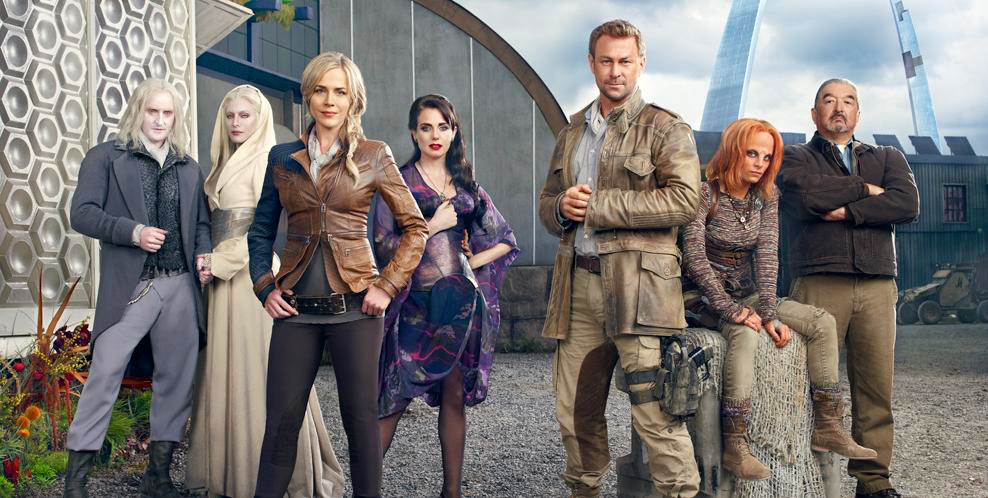
The squad members of Mass Effect 3Warning: Here be spoilers, albeit vague ones.

This is what it should have been all along:

To understand why I loved this game, you need to understand why I was so underwhelmed by Mass Effect 2, so forgive me as I repeat myself briefly.

ME2 was a game with great potential. It had a cast of mostly excellent characters — barring a few weak links like Jack and Jacob — and an epic storyline. The idea of evil robots trying to kill everyone isn’t exactly new, but the Reapers were a sufficiently fresh take on the idea to feel scary.

The problem is that said epic storyline seemed to almost be a side feature to the game. Most of the time was spent building your crew, with each character requiring both a recruitment and a loyalty mission.

This grind was made more tedious by how incredibly repetitive and formulaic these missions were. Virtually every recruitment mission had the player battling mercenaries, and virtually every loyalty mission saw its character betrayed by someone close to them.

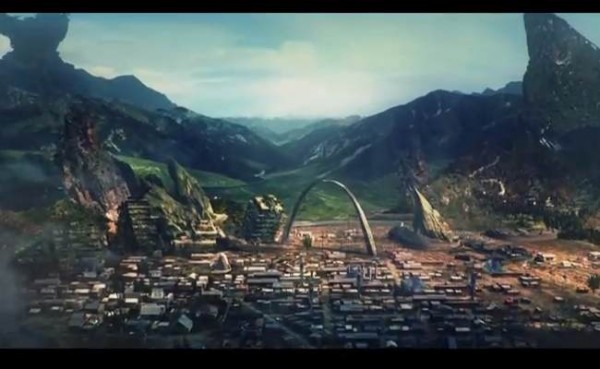
The Collector ship attacking a colony in Mass Effect 2The potential was there, but it was drowned by a scattered plot and cookie cutter missions. The best thing Bioware could have done was to get out of the way of their own plot.

And in ME3, that’s exactly what they did.

They couldn’t have addressed my problems with ME2 better if they’d been catering to me specifically. ME3 is exactly what I had hoped the last game would be, and it actually is worthy of the massive hype I’ve seen around the Mass Effect series.

Instead of being scattered, the plot is tightly focused. Nearly every mission ties directly to the main story arc of defeating the Reapers. When new characters are added, they appear organically as part of the storyline instead of as a wrenching detour.

And it’s a Hell of a story. It hits the ground running and never lets you come up for air — in a good way. There’s never a moment’s rest as planet and after planet falls to the Reapers and more and more people are claimed by their unholy crusade to bring order to the cosmos.

There are moments that are downright heart-wrenching. ME3 does a very good job of hammering home the terror of entire civilizations being put to the flame, and the psychological toll it takes on Shepard and his/her companions.

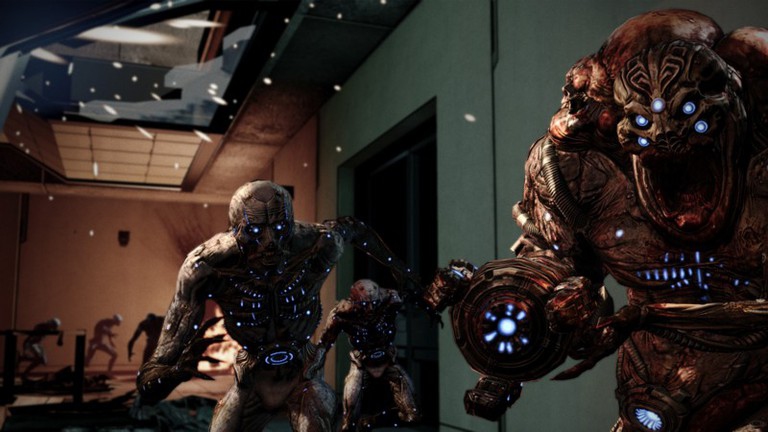
A husk and a cannibal in Mass Effect 3At times, it’s almost hard to keep playing in the face of the horror, but that’s a good thing. This is a game about the end of civilization throughout the galaxy — extinction on an unimaginable scale. It’s not supposed to be happy.

All in all, it’s just an excellent story. The ending could have perhaps offered a bit more detail, but I’m largely satisfied.

I also think I’m starting to understand why the Mass Effect series engenders such fervor and obsession in its fans, and I don’t think it’s down to the quality — at least not entirely. It’s more about how the games are designed.

After a while, the Normandy really does start to feel like home, and the characters like family. Play through a couple games with them, and they start to come to life in a way fictional characters rarely do. I feel like I know Garrus and Tali better than some people I’ve known in real life.

ME3 helps with this by streamlining and improving crew interactions. It’s a simple thing, but not needing to wade through a full cinematic and dialogue tree every time you talk to a character, even if they have nothing new to say, makes a big difference.

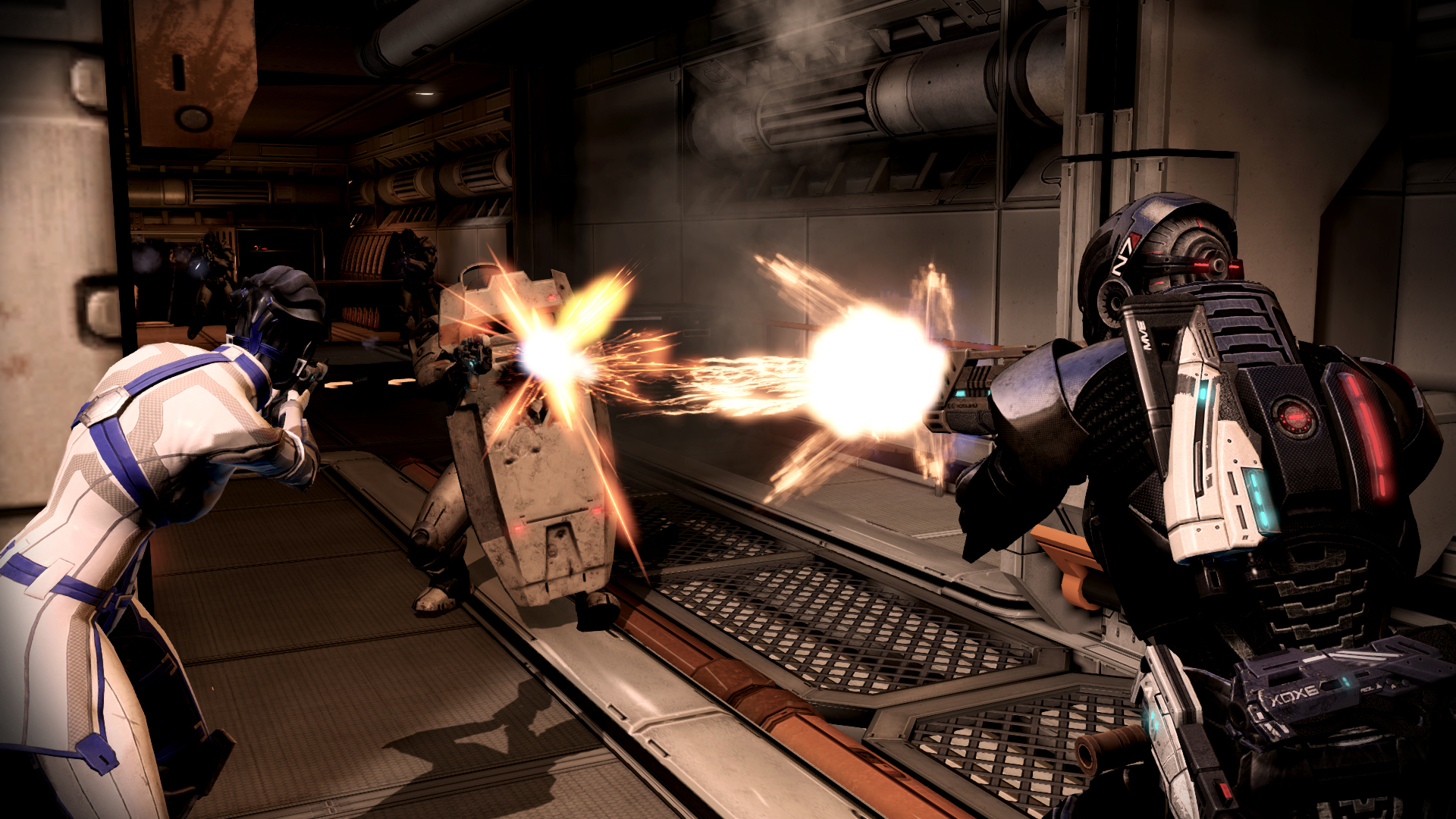
Liara and Shepard battle Cerberus troops in Mass Effect 3Seeing the characters move around the ship and interact with each other as well as the player also helps a lot. Tali drunk dialing Javik was almost on the same level of awesome as Mordin’s performance of Gilbert and Sullivan in ME2.

With all that being said, I still had some issues with ME3.

Still not perfect:

Probably my biggest complaint is the way the decision system works in the Mass Effect games. It’s good in theory, and it is one of the great strengths of the game, but it can also fall flat on its face at times.

For one thing, it’s far too easy to make a decision you didn’t want to merely by misunderstanding the nature of the choice being offered or its consequences.

In one hilarious incident, I accidentally blew up an entire planet merely by clicking what turned out to be the wrong button.

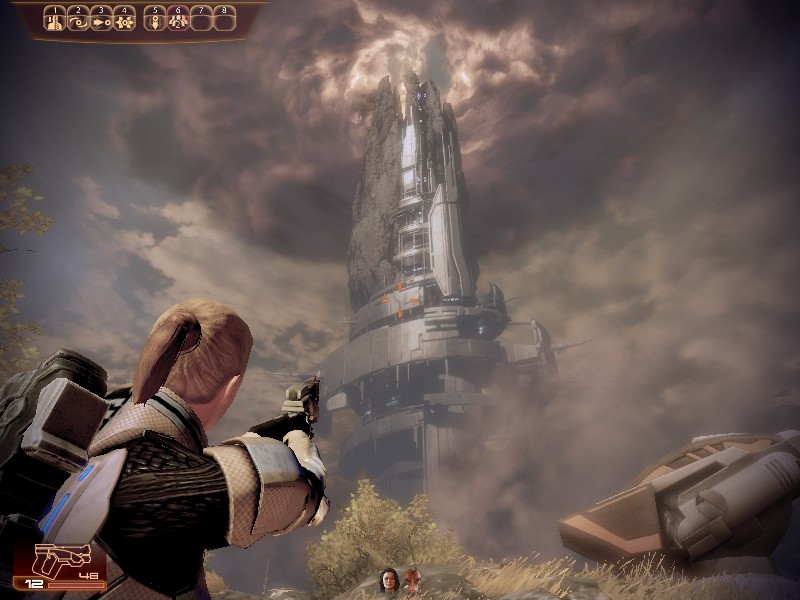
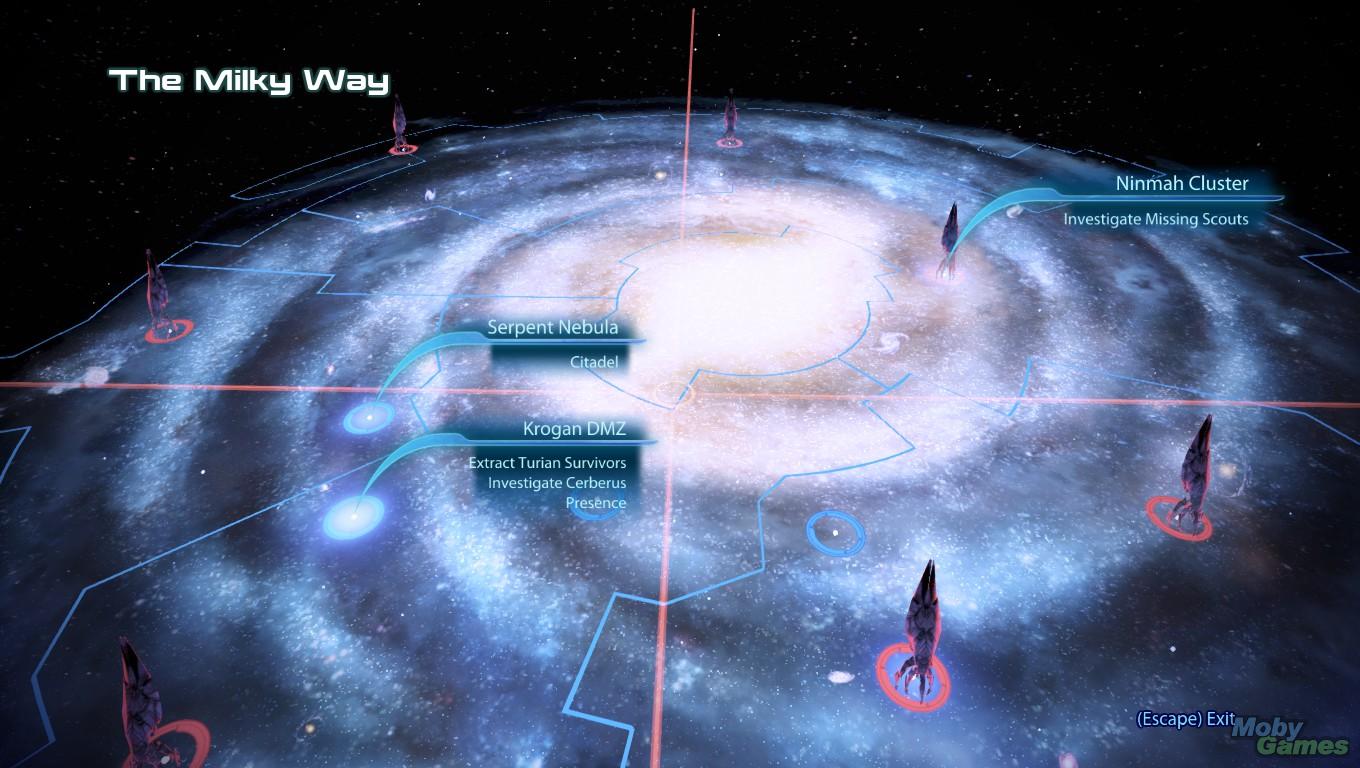
The galaxy map in Mass Effect 3I also decided to swallow my discomfort with the concept of in-game romances and get the full Mass Effect experience by hooking up with one of my crew, only to discover that I had already permanently locked myself out of pursuing the character I was interested in by not making advances in the only scene in the entire game where it’s an option.

Ultimately, my Shepard wound up in the “forever alone” category. Art imitates life, I guess.

Since the entire point of the game is to create your own story with your choices, having the system be this obtuse and unforgiving is just unacceptable.

I also felt that Bioware had already decided what the correct choice was in certain scenarios and was only offering other choices for the sake of consistency. The story was so skewed to favour some decisions that the choices became less “go with what you think is right” and more “do the right thing, or be a stupid bitch and ruin it for everyone.”

As a result, I sometimes made decisions I didn’t really agree with because the game guilt-tripped me into it.

The Reapers demolish Vancouver in Mass Effect 3I don’t care for Bioware’s morality systems, either. Dividing everything into rigid categories of “good” or “bad” and assigning numerical values to them just doesn’t work with any real world concept of morality.

It sucks to make a decision you think is right and then have a big red number pop up on your screen, and it also sucks to not be able to make choices you want to because you haven’t rigidly adhered to one kind of choices. You’re penalized for playing a character who isn’t a one-dimensional archetype.

Furthermore, there were some small parts of the story I didn’t care for. For instance, the Illusive Man got too crazy too quickly to be believable, and Thane’s last fight was so ridiculously choreographed that I wound up getting pissed off at the developers rather than Kai Leng.

Finally, while this isn’t necessarily a complaint per se, I’m hard-pressed to even call the Mass Effect series video games. They’re more like advanced choose your own adventure novels with a shooter mini-game tacked on. The gameplay is quite mediocre.

Also, while the story itself is stellar, its integration with the gameplay is virtually nonexistent. I’m left feeling like Bioware wrote a movie script and tried to shoehorn it into a game.

A Reaper destroyer in Mass Effect 3The good outweighs the bad:

Still, I always say the mark of greatness is when you can forgive something’s flaws, and that’s the case here. ME3 was a much better game than I ever could have expected based on the last one, and one of the best gaming experiences I’ve had in recent memory.

Overall rating: 9.1/10

* * *

By the way, I have a couple of questions for any Mass Effect fans reading this.

First, I’ve heard nothing but bad things about ME3. Why didn’t anyone like it? I guess my bad taste strikes again…

Second, what was the original Mass Effect like? Did it more closely resemble ME2, or ME3? After playing ME2, I assumed I didn’t miss much by not playing it, but now I don’t know what to think.

Review: SC2: Heart of the Swarm: Multiplayer

In part two of my review of Starcraft II: Heart of the Swarm, I’ll be covering the changes to multiplayer.

Oracles in the new Heart of the Swarm expansion for Starcraft 2I should preface this all by saying that I am very bad at Starcraft II multiplayer, so I’m not going to be commenting on the state of balance or anything like that. This is just my opinions on what’s fun as a player and a spectator.

New multiplayer units:

Obviously, the most interesting change to multiplayer is the new units added to all races.

Initially, I was rather critical of the new units, but I feel a bit better about them now. I still think the tempest is pretty boring, though I will admit it has its uses, and I do agree that Terrans kind of got the short end of the stick. Widow mines are cool, but hellbats are just a really weird and confusing firebat rehash.

I still think the new Zerg units are cool, though — vipers are absolutely hilarious to watch in action. And I am grateful that they didn’t end up scrapping units from any race.

As a Protoss player, that race is always what I most care about, and I’m mostly happy with what we got — tempest aside.

The new mothership core unit in Starcraft 2: Heart of the SwarmProbably the most interesting addition is the mothership core. It’s made of tissue paper, so you have to be careful with how you use it, but its mass recall ability opens up a lot of possibilities for early aggression, and it’s helpful for base defense, as well.

A slight downside is that the mothership core is actually a lot better than a full mothership, meaning the upgrade is only going to be useful for identifying noobs or trolling your opponents.

Oracles are also quite a welcome addition. After countless revisions, they ended up being a very scary harassment unit capable of annihilating entire mineral lines in moments. Protoss have never really had any good options for harassment before now, so this is a big deal.

Unfortunately, I’ve learned I’m very, very bad at harassment. This bothers me because it’s a strategy I really enjoy, but it seems to lose me the game every time.

At least I can enjoy it as a spectator.

Taking the sting out of failure:

The new oracles and tempests in Starcraft 2: Heart of the SwarmThe other major changes to multiplayer seem designed to take some of intimidation factor out of competitive play. I’ve already covered the new training tools, but that was just the beginning.

The multiplayer rewards in Wings of Liberties basically only came one way: win ladder matches. Hundreds upon hundreds of ladder matches.

HotS changes this by introducing an RPG-style leveling system. Things like spending resources and killing enemy units awards you experience for your current race, and the higher level you are, the more decals, portraits, and unit skins you unlock.

The interesting thing is that you still earn XP even if you lose your match — though you obviously get more from winning. This seems like a pointless palliative at first, but it really does make defeat feel a bit less painful and make the ups and downs of competitive play easier to bear.

You can also get experience from more than laddering. Unranked play and even matches against the AI still earn XP, so players of all stripes can get their sexy new unit skins.

The new leveling system in Starcraft 2: Heart of the SwarmSpeaking of unranked play, it’s probably my favourite new multiplayer feature. There’s nothing Blizzard can do to eliminate ladder anxiety entirely, but unranked play helps a lot. It allows players to get all the benefits of ladder — like MMR-based matchmaking — without the risk of losing your ladder standing.

My ladder rank may be nothing impressive, but I’d still rather not sink any lower. Gold league I can live with. It’s refreshing to not have to worry about suffering the indignity of a demotion to silver after a losing streak.

Still not perfect:

With all that being said, HotS does nothing to address many of my long-standing complaints about competitive play in Starcraft II.

My biggest complaint is that the game is so utterly skewed towards economy as the most important factor that, for most players, you can pretty much ignore combat entirely if your macro is good enough. You can just a-move your units into the enemy base and go back to macroing.

I don’t think that’s a good design for a game that’s supposed to be about epic, fast-paced combat.

The beginning of a Starcraft 2 ladder matchIt’s also a fact that nothing at all happens during the first three or four minutes of the vast majority of games. If something does happen, it’s usually someone doing an all-in cheese strategy, and nobody wants to see that.

One of the reasons I like to watch replays from Husky is that you need a complete goofball like him to make the opening minutes bearable.

I don’t see how this could be changed without completely redesigning Starcraft II. All I can say is I miss hero harassment and creeping from Warcraft III.

I would love a mode that lets players begin with pre-established bases, but again, it’s too big a change to ever become the norm at this point.

* * *

Overall rating: 7.5/10 An evolutionary improvement, not a revolutionary improvement.