When in Doubt, Elves

I like mottos. There are certain sayings and slogans by which I try to live my life: “Better safe than sorry,” “credit where credit is due,” and so forth.

But perhaps the most important is, “When in doubt, Elves.”
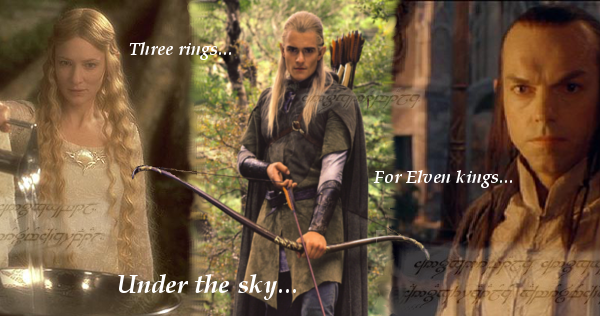
A Lord of the Rings image created for a graphics contest at GalacticaBBSI like Elves. They are perhaps my favourite part of the fantasy genre, and that’s saying a lot. It occurs to me I haven’t spent much time talking about how awesome Elves are on this blog, and that’s an injustice that needs to be corrected.

Why do I like Elves?

Like so many things in my life, my love of Elves goes back to Warcraft. I was about six or seven years old when Warcraft II: Tides of Darkness came out. This was early enough in my life and the history of the real time strategy genre that ranged units were enough to impress me.

The ranged unit for the Alliance was the Elven archer. While the other units were getting themselves killed in melee, the Elves were hanging back and sniping their enemies down from afar. It didn’t take me long to figure out the Elves had the right idea.

Couple that with their snazzy capes, calm and confident voice-overs, and epic hair, and you had a unit that was, to my childish mind, the epitome of cool.

Art of a blood mage from the Warcraft universeI’ve talked before about how my love of Warcraft’s Elves — who later became the High Elves, and then the Blood Elves — blossomed as they grew up along with me. The edgy, morally ambiguous Blood Elves were like candy to my teenaged mind.

But even before the Blood Elves earned my unending love and devotion, I was already utterly obsessed with the concept of Elves.

You see, Elves are everything I’m not. I’m clumsy and awkward, but Elves are graceful and elegant. I’m young and inexperienced, but Elves are ancient and worldly. Elves are beautiful, and I’m… yeah. Where Elves are powerful and remarkable, I’m ordinary and uninteresting.

There’s a certain catharsis to Elves, too. They understand what fools we humans can be. They see us as the petulant children we are. Elves would not ravage the environment as we do. They would not brutalize the animals of the world as we do.

The alien nature of Elves fascinates me, as well. Proper Elves don’t quite think like humans, and I’ve always loved any character or fictional race that has a different way of thinking than we do. I could probably fill a whole other post on the reasons for that…

An image of the shindu Sin'dorei, the failing Children of BloodI recognized all these things at a young age, and Elves quickly came to dominate my life. In any video game, I always played an Elf when given the option. In the make believe games I played with my friends, I was always the Elf. I wrote stories about Elves. I coloured pictures of Elves. For a while when I was a kid, I even dreamed of getting plastic surgery to add points to my ears — though I’ve since abandoned that ambition.

To the haters:

Now, I know a lot of people out there like to hate on Elves and complain about their over-exposure. I can’t escape the feeling that most of these people are simply being hipsters and hating Elves for no other reason than because Elves are so popular, but a few people actually come up with reasons for their Elf-prejudice.

Let me explain why these reasons suck.

One of the most common arguments is that Elves are too perfect, but there are a number of flaws with this line of reasoning.

For one thing, every writer has a different take on Elves. To simply write the entire archetype off is ridiculous. I’ve seen dozens of different depictions of Elves over my life, and many were far, far from perfect.

Art of a Drow warriorWhich brings me to my next point: Elves usually aren’t perfect. Even putting aside Drow, Dark Elves, and the many other incarnations of Elves that are just downright evil, Elves are usually at least as flawed as any other fantasy race.

The Night Elves are brutal, closed-minded, holier-than-thou, and xenophobic. Blood Elves are arrogant, reckless racists who will do absolutely anything to survive. Tolkien’s Elves were indifferent bastards who were happy to leave Middle Earth to its fate. I could go on listing examples, but I think you get the idea.

Another complaint that comes up about Elves is that they’re too pretty. Imagine someone writing off a fantasy race — Dwarves, for instance — simply because they’re ugly, and you realize how shallow this argument is.

I’m not saying there’s no one out there who has legitimate complaints about Elves, or that there aren’t some depictions of Elves that are just bland and boring, but for the most part, I find all this hipster Elf hate just silly.
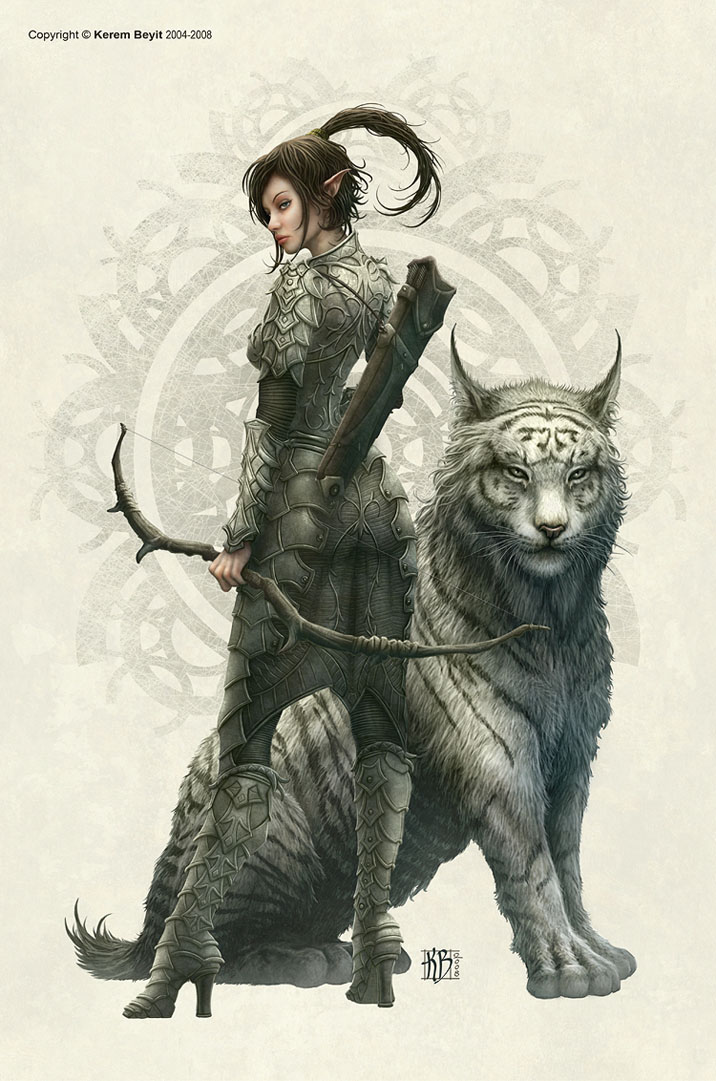
Art of an Elven rangerMy Elves:

Oddly enough, Elves have appeared very little in my own writing, despite my love for them. There are no Elves in the World Spectrum, or in any of the other major writing projects I’ve done.

But this is not out of any desire to avoid writing about Elves, nor any lack of love for the archetype. Quite the opposite, in fact.

I have not yet done much writing about Elves because I want to get my Elves right. I have been planning my books about Elves since childhood. I’ve poured all my best ideas and all my creativity into them. I will not write them until I’m absolutely sure I can do them justice.

But they’re always in my mind. I’ve worked hard to make them the best example of the Elf archetype I can. They are radiant in their beauty and terrible in their fury. They are elegant, deadly, wise, and alien. And one day, I will bring them to life.
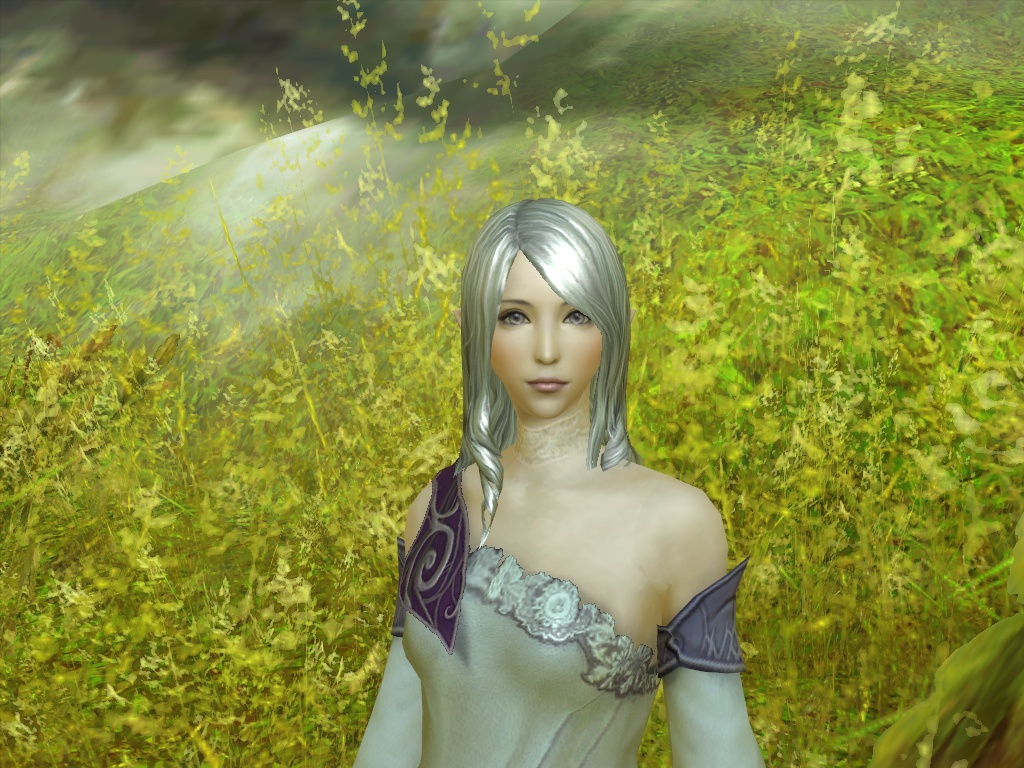
A character from my writing recreated via Aion's amazing character customizationSome day, Seesha. Some day soon…

Original Fiction: The Forest God’s Child

It’s time again for me to take my courage in my hands and post some of my fiction. This is another one to spring from the old writing contests at TrekUnited, but it wasn’t actually written for the contests.

As I’ve mentioned before, we often used random pictures or artwork as prompts for our stories. Often, we would have some pictures left over that were never claimed by anyone. One was so cool that I decided to write a story based on it anyway, though none of my fellow writers on the forum ever saw it.

I wanted to include the picture in this post, but I wasn’t able to get TU to load. Which somewhat reminds why I stopped going there.

I may have gotten a little political with this one, but hopefully, you’ll find it interesting.

—————–

The Forest God’s Child:

© 2013 by Tyler F.M. Edwards.

In late summer, the Forest God found the child.

It was a little thing, fragile and vulnerable. It was at the very edge of his domain, and the Forest God did not notice it until it had been there for some time. He was surprised that it had not perished of thirst or fallen prey to some of the more dangerous creatures in the woods.

The Forest God understood almost nothing of humans, and he didn’t much like what he did know about them. That they had abandoned this defenseless creature only further proved what he had already suspected: humans had no respect for life.

Still, though autumn approached, the warmth and bounty of summer still flowed through the Forest God’s glades and through his heart, and he took pity on the poor creature. He shifted his ancient form from his resting place and scooped the child up with his branches, carrying it back to his realm in the heart of the forest.

Here, the seasons did not pass as they did in the outside world, and the little child—a female, he soon discovered—grew up amongst a seemingly endless summer. Though the Forest God understood little of her kind, he did his best to make her life pleasant. He called forth flocks of birds to sing for her. He tamed squirrels, rabbits, and deer to be her playmates. When she thirsted, she drank from the pure streams that babbled through his glades, and when she hungered, he grew fields of berries at her feet or sent fruits and nuts down from the great trees. The glades filled with the creature’s sweet laughter, and the Forest God was happy.

But time passed. The child matured, summer turned to autumn, and the Forest God grew troubled. All things in nature served a part of the greater balance, but the child—soon to be a child no longer—was something new in his realm, and he did not know where she fit in. Her kin troubled him, as well. Unlike most other creatures, the humans did not rest with the winter. They continued to stomp across the earth, burning and cutting and ruining the land in the name of their industry. They cut a little more away from the forest every year, and he feared that one day they might even strike at his realm.

Winter came. The leaves fell, the air grew bitter and sharp, and snow blanketed the glades. Icicles hung from the branches, glinting like the tips of spears. The Forest God’s heart grew cold and hard. He felt the pain radiating from the forest all around him as the humans tore away more and more, always consuming like a relentless plague. He wished he could stop them, but he was powerless in the face of their lifeless industry.

It was then that he saw a purpose for his child, now a young woman. He called upon the resources of the forest to outfit her for war, and he imbued her with the ferocity of the wildest parts of nature.

When she was ready, she knelt before him, and he spoke to her with the creaking of branches and the whisper of the wind, a language of the wilds that she knew far better than whatever tongue her parents had spoken.

“Humanity is a blight upon my forest,” he said. “They take and rip and corrupt, but they contribute nothing in return. Go forth now, my child, and exact vengeance upon your wicked kin.

“Slay as many as you can find. And when your hands drip with their blood, return to me so that it might fertilize the forest and in so doing bring some good from the wretched race of humankind.”

His child departed to carry out his will, and the Forest God was left alone in the grim cold. And when she finally returned, she poured the blood of his enemies upon the soil, and it tasted sweet upon his roots.

* * *

At last, winter loosened its grip upon the Forest God’s realm. The snow melted, and buds appeared all across the Forest God’s body. Warmth once again wormed its way into his heart, and the memories of summer returned to him.

He remembered finding the child. He remembered her as she had grown, full of wonder and innocence. He remembered the way she had laughed when he had commanded his birds to sing and dance for her, and suddenly the songs of the returning birds cut at him like an axe.

“What have I done?” the Forest God wondered. The tree trunks around him groaned mournfully.

When next his child returned and dripped the blood of his enemies upon his roots, it tasted bitter and foul. When she went to hunt again, he stopped her. She was confused, but she obeyed him without question. She secluded herself in the quiet glades and rested, her long battles having tired her.

The Forest God brooded for many long days. He still believed that humans were, by and large, wicked creatures that had grown beyond nature’s control. But he did not like what he had made his child into. Once she had been full of life and joy, but now she was a creature as hard as stone, devoted only to causing destruction in his name. What he had done to her was wrong, he realized. She was now little different from those among her kin who despoiled the forest.

Worse still was the thought that if there had been or still was good in her, then there might be good in other humans as well. What if he had misjudged them? What if some of the people his child had slain had been good?

Spring was the time of new growth and new ideas, though, and so the Forest God eventually found what he thought could be a solution to his problems.

He called his child to him, and she knelt before him.

“I have wronged you,” he said. “In winter’s harshness, I turned you into a tool, a weapon. This is not what you were meant to be. I know now the path that you must walk, the path that will make things right for all creatures—for the forest, for yourself, and for the rest of your kin. You will go forth again into the world of humankind, but you will not go to bring war. Instead, I wish you to study them. Learn their language and their ways. Once you have done that, find the best among them, the kindest and the gentlest, and make yourself known to them. Make yourself one of them. Then, finally, when there is trust among all parties, tell them of me. Tell them of the bounty of this place, and tell them that I welcome any of their kind who come here with the love of the forest in their hearts.”

The child’s face was confused, maybe even hurt, and he placed a comforting branch upon her shoulder. “You will be gone for many turns of the seasons in the outer world. You must be strong, and remember always that I will be here to welcome you when you return.”

She wept, and as her tears fell upon his roots, he tasted in them her love for him, her desire not to leave, and her fear of living in the outside world.

“Go now,” he commanded, and though he knew it pained her to do so, she obeyed.

* * *

Many days passed. Spring turned to the full bloom of summer, and all was warm and alive in the glades again, but things seemed oddly empty without the child, and the Forest God did not take as much pleasure in the season as he had in the past.

Eventually, summer faded to autumn, and the Forest God began to despair that his child would ever return. Perhaps he had been wrong to trust the humans, he thought.

But then, he noticed something moving through the forest: a party of humans. These were not the despoilers he had come to expect. They did not wield axes, saws, or fire. They came gently, with care for the life around them. And at their head was his child.

They entered the heart of the forest and so came into his realm. There were only a few dozen of them, but their arrival changed the Forest God’s entire view of the world. Here was a seed of goodness within the human race, a seed he could cultivate into something that would balance the rapacious nature of their kin.

His child brought them before him, and she knelt. She told him nothing, but she did not need to. He saw it all.

Joy filled the Forest God’s heart, and for a moment, the impending chill of winter was forgotten. Flowers bloomed all over his body, and birds sang with his joy. The humans gaped in wonder.

“You have come because you see the harm the rest of your kind does to the wilds, and the goodness they deny themselves in doing so,” he said, and his child translated his words into the language of humans. “You will become a new part of my realm, its keepers and custodians. Here, you and your families will live in perfect peace and want for nothing. In return, I ask only that you act as my hand in relations with the rest of your kind. When humans come to the forest with reverence in their hearts, you will welcome them and offer them all the bounty the wilds have to offer. You may even let them join my cause as you have. When humans come here to do violence and evil in the name of their own greed, you will be my force of retribution and give their broken bodies as nourishment for the soil.”

Autumn became winter, and the Forest God’s thoughts once again become cold and hard. It was during this time that he trained his new servants to be his shield. Her armed them and gifted them with all the fierceness that the wilds could offer. But this time, he did not send them out to do harm. He kept them close, and only dispatched them when their kin provided a serious threat.

At last, the bitterness of winter faded, and his realm was reborn in spring. By now, more humans had joined his cause, and their society had grown. Young ones and children played amongst the trees, and laughter once again filled the air. And the Forest God was happy.

—————–

If you’ve enjoyed my writing, make sure to check out Worldspectrum.net, the home for my upcoming series of ebooks. Become a follower for regular news and updates.