The Secret World: Home

I’ve done so many posts gushing with praise for The Secret World. There’s really nothing left for me to say that I haven’t already said.

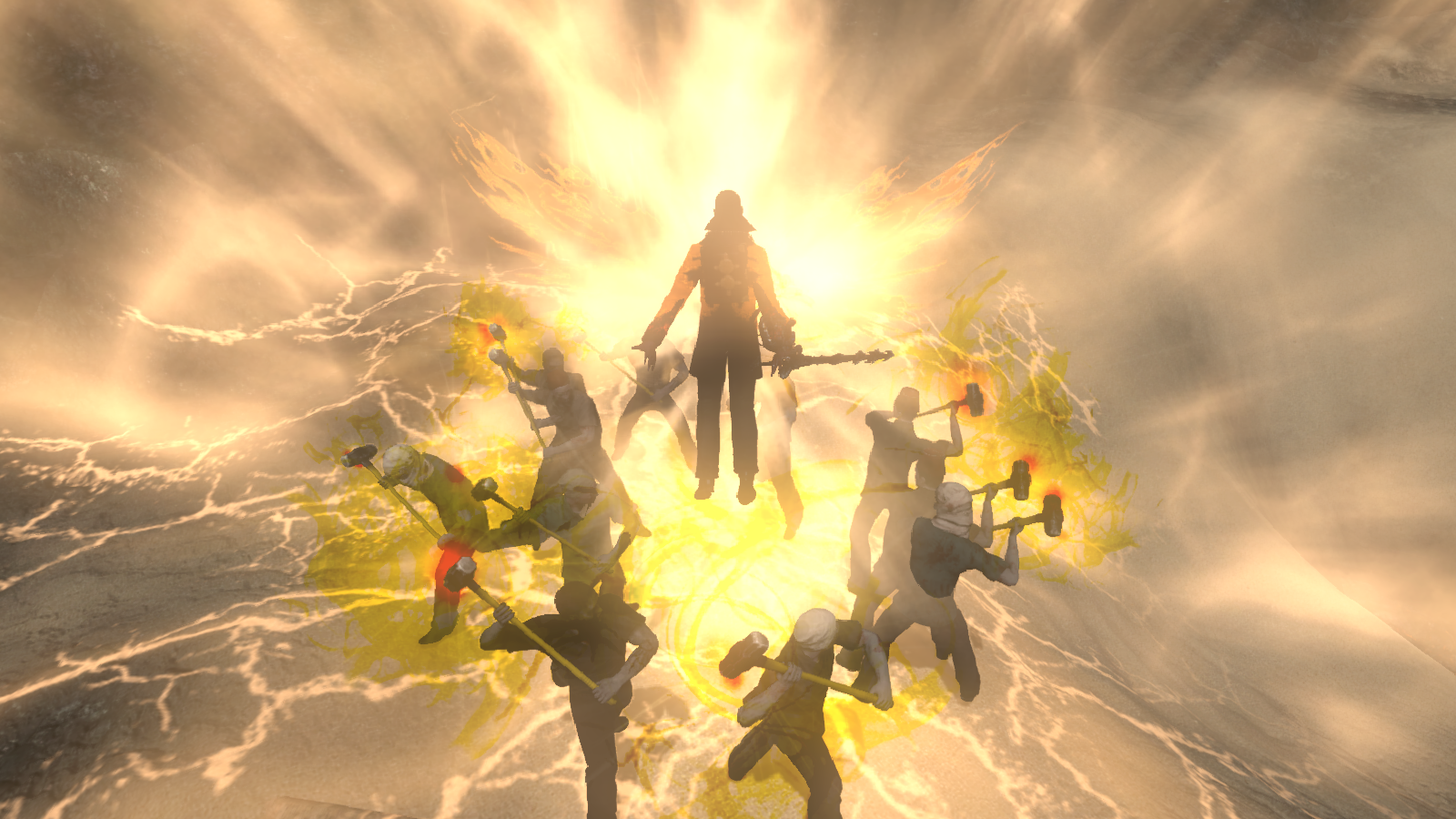
My Templar activates her ultimate ability, Ophanim of the Unchained, for the first time in The Secret WorldBut I’m gonna gush some more anyway.

In the MMO community, you sometimes hear people talking about a game as their “home.” A virtual world that’s particularly special to them, that they will never leave.

Lately it has occurred to me that The Secret World is my home.

Sure, I’ve played World of Warcraft longer, sunk more hours into it. I certainly don’t see myself ever leaving WoW behind. But my connection is to Azeroth, not to WoW as a game. WoW is my least favourite incarnation of Azeroth, by a significant margin.

And WoW doesn’t have the same feeling of belonging. It has a lot of familiarity, a lot of nostalgia, and don’t get me wrong: WoW is a very important game to me, and for all my gripes, it’s still quite special to me.

But it’s not The Secret World.

TSW is a game that gives me tremendous pleasure simply to inhabit. I have so, so many great memories of this game, and many of them are spectacular moments, epic climaxes to brilliantly told story-arcs, but just as many are far more simple: sitting in the woods of Solomon Island and listening to the seagulls, watching the dawn glint off Siren’s Lake, feeling the oppressiveness of the night sky in the grim winter landscape of the Carpathian Fangs.

A runestone on Solomon Island in The Secret WorldIt’s certainly an odd match. On paper, it’s not a game that would appeal to me. I’ve never been especially fond of horror or urban fantasy, and I think conspiracy theories are ridiculous. It has no Elves, no intricately strange and beautiful non-human cultures to immerse myself in, no dragons or knights in shining armour or any of the things that usually appeal to me. But yet it has wormed its way into my heart all the same.

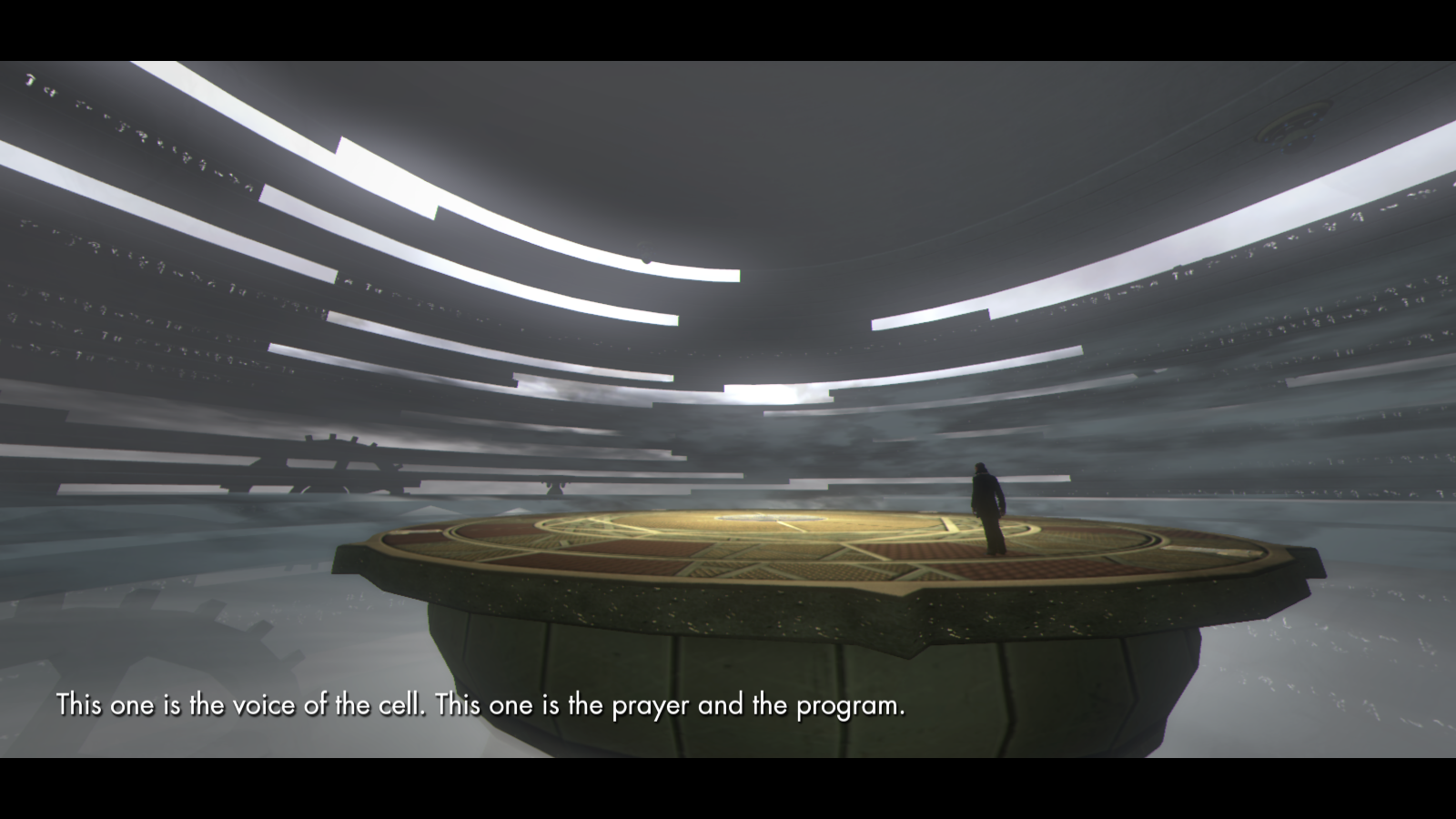
Somewhere along the line TSW became more than a game to me. Sometime between pursuing Loki into the depths of the earth, trekking through the surreal industrial nightmare of the Hell Dimensions, and delving into the darkest pits of the Dreaming Prison, TSW came to embody a sense of infinite mystery and possibility.

Rationally I know I’ve seen nearly all there is to see in TSW, but after three years of constantly stumbling across side missions and lore honeycombs and rare spawns and weird things I cannot even explain, there’s a part of me that is always going to believe something wonderful — or terrible, or both — might be lurking around the next corner. That there are still mysteries yet to plumb.

It’s that feeling of unlimited potential that forms the foundation of all speculative fiction. It’s the driving force in my life. It’s why I became a writer, why my apartment is full of books and action figures and space ships, why I’m a gamer, and a reader, and a fan of movies and TV.

It’s that feeling of possibility that makes the game so enchanting. It doesn’t feel like a game anymore. It feels like a world. A world I do not and may never fully understand, but one which never ceases to fascinate me.

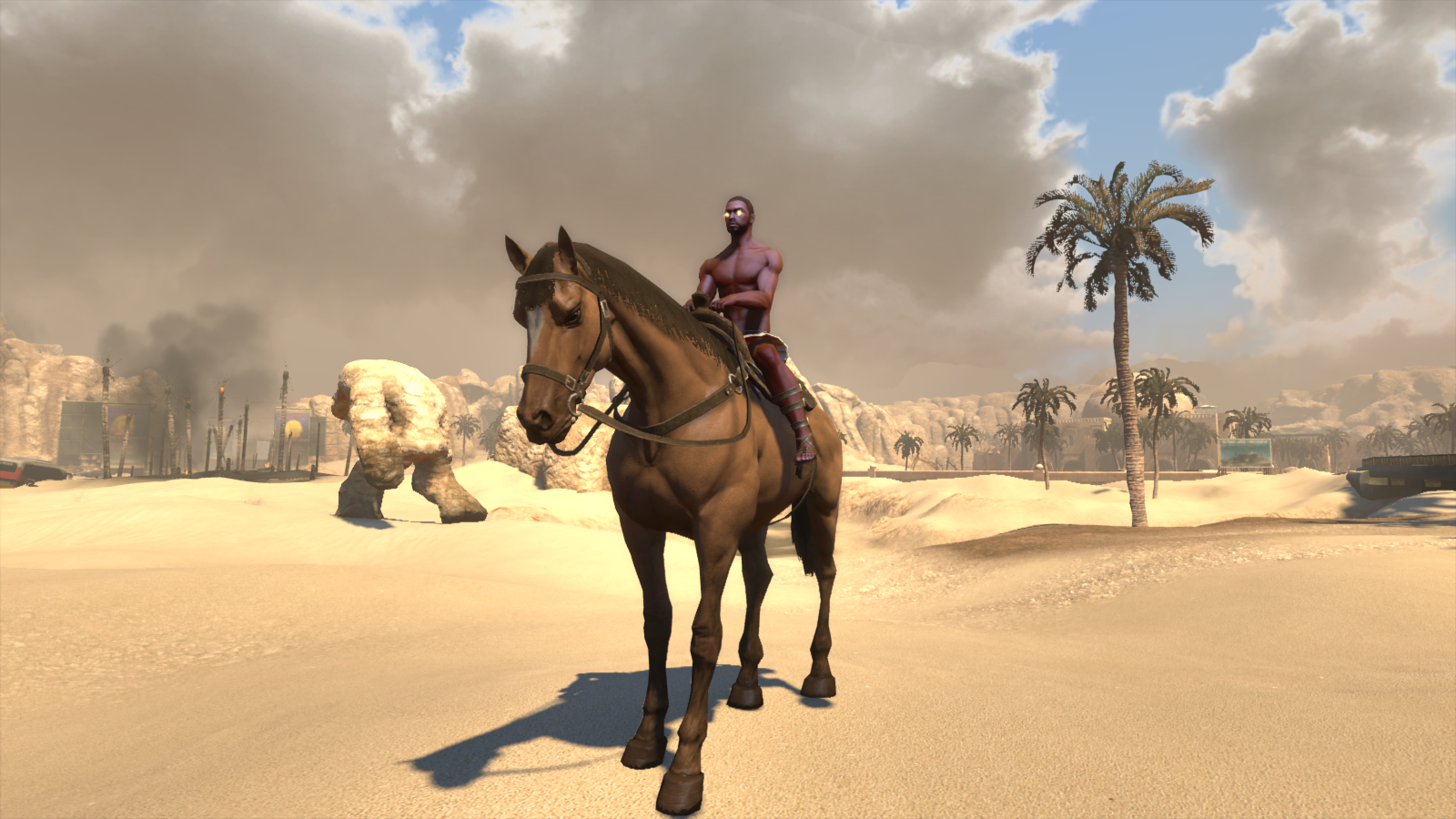
My Dragon busts out Ricky Pagan's boombox in The Secret WorldIt’s that feeling of possibility that keeps the game interesting to me, that puts a smile on my face even if I’m doing something as objectively dull as repeating Bullets for Andy for the eleventy billionth time (SERIOUSLY ANDY DO YOU HAVE ENOUGH BULLETS YET?).

The Secret World is the best game I’ve played in my adult life. It may be the best game I’ve ever played. There’s a decent chance it may be the best game I will ever play.

Oh, of course it’s not perfect. It’s very good, and a lot of its most glaring flaws have been solved, but it definitely has its annoyances. Ak’ab are still Hell, and Oni are worse. I still want to slap whoever gave the green light to the mob density in Orochi Projects, and I’ve never been fond of silent protagonists. And it has entirely too many horse heads.

It’s not perfect, but nothing is.

And it just clicks for me, in a way nothing else in the gaming world quite does.

It’s home. It’s where I belong.

Tyler Versus the MMO Trinity, Part Three: My Solution

Over my past two posts on the so-called “holy trinity” of group roles in MMORPGs, I’ve discussed my problems with the trinity, and some of the good times I’ve had outside the traditional role system.

My warlock battling Ragnaros the Firelord in pursuit of Dragonwrath, Tarecgosa's Rest in World of WarcraftNow, we reach the end of this long journey as I outline my personal plan for how to “fix” the trinity.

For some crazy reason I decided to do all three of these posts at once. It’s well after midnight, we’re approaching hour three, my fingers are sore, and my brain is fuzzy, but Hell, let’s do this.

First, some caveats:

I was hesitant to do this for a very long time because I don’t like playing armchair game designer. Well, actually, I like it a lot, but I don’t like the risk of being seduced by the idea that I actually know what I’m talking about, or giving anyone the idea I think I’m better than I am.

I am not a professional game designer. I know this. I’m not going to pretend I can do a better job than they can, because I can’t. This seems like a good idea to me, but what do I know?

And I really doubt anyone particularly wants to hear my pie-in-the-sky ideas for how games should be designed, hence why I haven’t done posts like this before now. But if I’m going to talk about the trinity, I think this is a necessary part of the discussion.

My Templar tanking a lair boss in The Secret WorldSecond, I want to stress once again that variety is what I want. What I’m about to outline is a solution to the trinity. It is not the solution to the trinity. I obviously think my idea is good, but I wouldn’t want to see it become the only system used by MMOs. I want a mix. Some games with traditional roles, some with softened or modified roles, some with no roles.

That said, this is a plan that I believe would solve most of the problems with the trinity while preserving much of its virtues. Your opinion may vary.

On with the show!

Where Guild Wars 2 failed:

Unfortunately, Guild Wars 2 has become the poster child for trying to break the trinity. I say “unfortunately” because they did an awful job of it. Of all the games I’ve played with no trinity or a relaxed trinity, GW2 is the only one that fails to provide fun group dynamics. Ironic considering how much of a selling feature it was.

Things are supposedly a bit different now that raids are in, but at launch, Guild Wars 2 essentially eliminated tanks and healers. This solves some problems, but it also made pretty every class play mostly the same. It made a lot of things into mindless zergs, and combined with dungeon design that wasn’t sufficiently removed from that of trinity games, it was just broken as all Hell.

My thief battling the Sons of Svanir in Guild Wars 2But there are lessons to take from Guild Wars 2’s failure. They were in the right neighbourhood, but they chose the run path.

You see, they got rid of the wrong roles. Tanks and healers are fine.

I say it’s DPS that needs to go.

Death to DPS:

Wait, what?

Tyler, you want to delete the overwhelmingly most popular MMO role? The one you play the most? Are you high?

But think about it. There’s method to this madness.

Imagine what happens when DPS is no longer a dedicated role. You no longer need to tune healers and tanks to have lower damage. In a world where no one is a DPS, everyone is a DPS.

That immediately solves the problem of it sucking to solo as a tank or healer.

My Sith inquisitor in Star Wars: The Old RepublicThen think about what group compositions look like in this hypothetical game where there are only two roles, not three. When you can only include tanks and healers in your group, the responsibility is much more shared.

This solves the problem of the disproportionate sharing of responsibility. It’s not just one tank and one healer. There’s several of each. That glorious double tank run I had in SW:TOR? That could be the norm.

In such a paradigm, if you screw up and get yourself killed as a tank, it wouldn’t be a guaranteed wipe. The other tank(s) would pick up the slack.

I don’t know about you, but that sounds tremendously appealing to me.

Similarly, this makes forming groups a lot easier. Tanks and healers obviously wouldn’t be a rarity, and in theory, such a system could be balanced to no require rigid party compositions. We’re getting far into the hypothetical here, but I think it could be the case that if you have more tanks, your party takes less damage and needs fewer healers, and if you have more healers, you can restore more damage and need fewer tanks.

This would necessitate softening both roles a bit. For example, healers couldn’t simply spam heals all day. They’d need to mix both heals and damage.

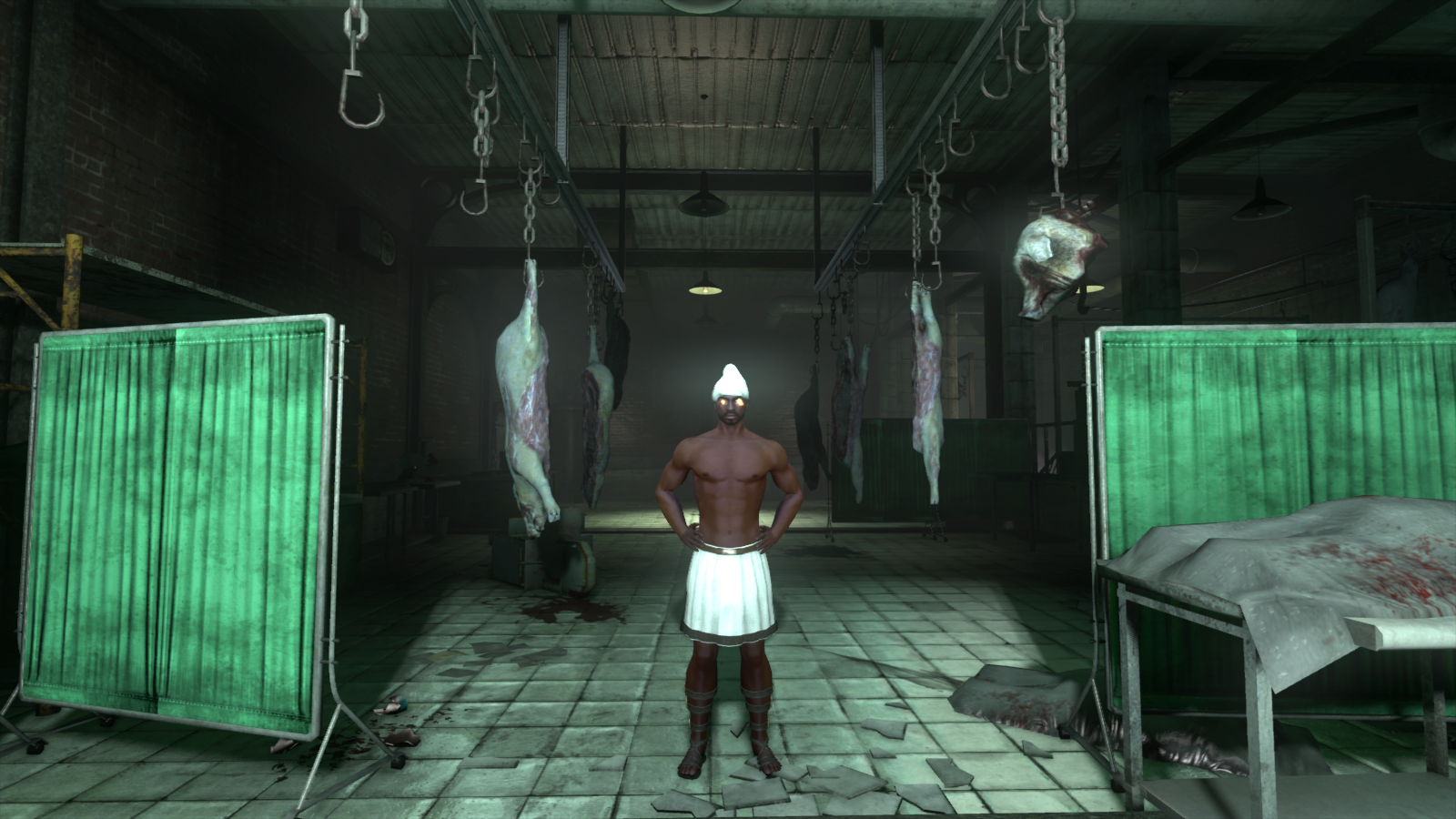
My group approaches the final boss of the Slaughterhouse in The Secret WorldThis would require slowing down the pace of both heals and damage. Not slowing combat altogether. You know me; even the standard 1.5 second global cooldown feels sluggish to me. But tanks don’t need to be losing half their health every few seconds. There should be time to recover from a mistake, and on the flip side recovery from bad play shouldn’t be one click a way. Healing is at its best when it’s a tug of war.

I’d put heals on cooldowns or otherwise limit them. Not heavily — healing should obviously be a core part of playing a healer. But it shouldn’t be all you do. Like the devoted cleric in Neverwinter, there should be a degree of adaptation based on the needs of the moment. Sometimes it’s about healing. Sometimes it’s about pouring on the damage.

I’d also like to see a little less emphasis on straight up healing and more on buffs and utility. I like The Secret World’s take on buffs — short duration, dramatic effect — and I’d like to see more of that.

So under my hypothetical design, healers would perhaps be more accurately described as support. They keep their parties afloat through a broad toolkit of heals, buffs, and damage.

As for tanks, I’d soften their role a bit, too. I’m not sure I’d do away with aggro mechanics altogether, but I don’t think tanks should be expected to hold aggro on everything all the time. I’d probably make taunts an emergency cooldown rather than a bread and butter ability. Combat need not be total anarchy, but there should be some unpredictability to it.

My devoted cleric in NeverwinterSlowing down incoming damage supports this, as well. With mobs delivering hits that aren’t so massive, healers (or supports) can take a few hits without collapsing, and combat can afford to be a little less carefully choreographed.

Aggro mechanics are one of those things about the trinity that are painfully artificial, so I’d put a greater emphasis on tanks controlling enemies directly through slows, stuns, pulls, knockbacks, and abilities that manipulate the battlefield. Let them physically impose their will on enemies.

By softening the roles this way, you’re providing everyone a broader experience of combat. Everyone is, one way or another, interacting with enemies, delivering big and satisfying attacks, and aiding their team in a crucial way. At the same time, distinct roles aren’t gone entirely. There’s choice and variety.

It even solves the realism issue to some extent. With multiple tanks, it’s at least somewhat plausible that they could hold off enemies from their weaker team mates. Not because Orcs are magnetically attracted to dudes in plate for some reason, but because they form a physical barrier around their allies. I think I could suspend my disbelief for that.

It’s probably not as simple as I’m making it out to be, but to me, a two-role system seems like an option that avoids the worst flaws of the trinity while still offering much of its benefits.

* * *

Thus concludes my epic series on the trinity. My duty as an MMO blogger is done. Agree or disagree, I hope I’ve at least provided some food for thought, or entertainment value.

While you’re reading epic rants on traditional MMO design by yours truly, why not check out my latest article on MMO Bro: The Case Against MMORPG Button Bloat.